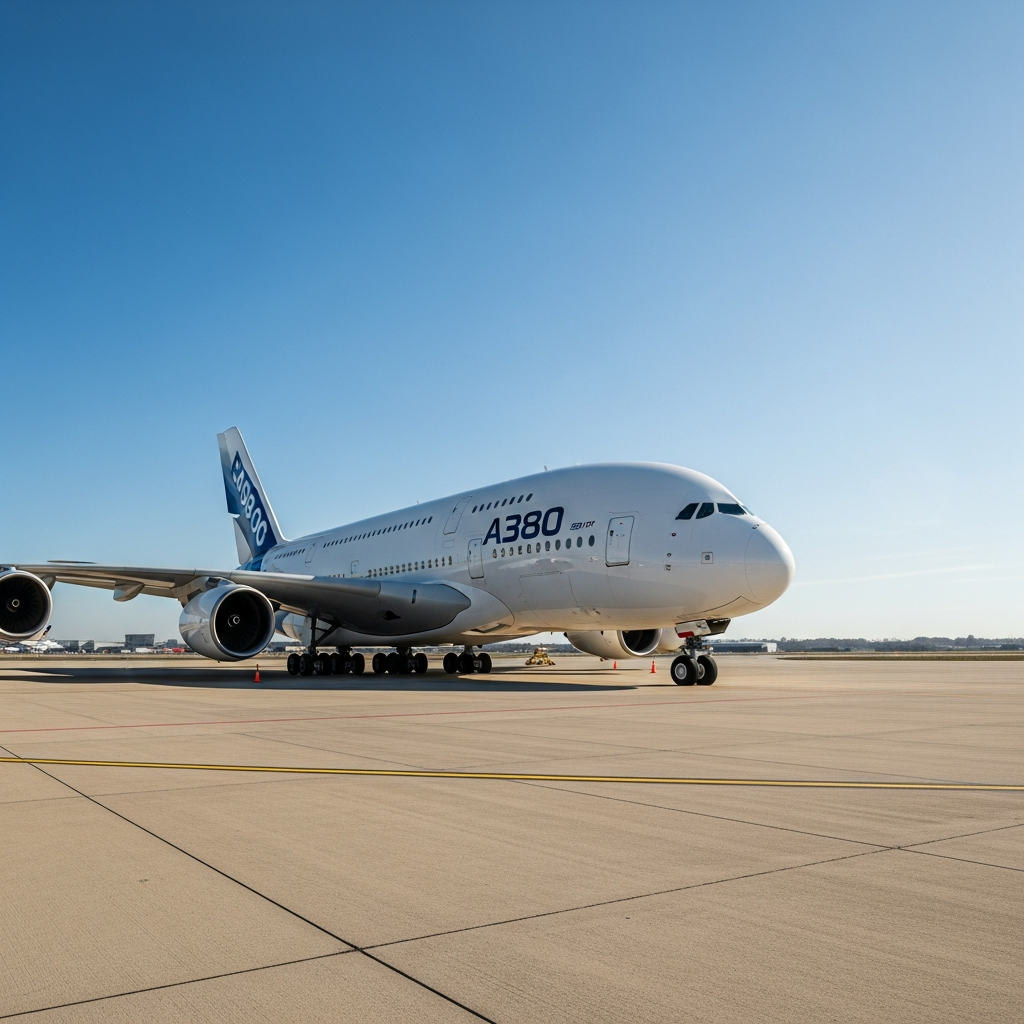
The European Union Aviation Safety Agency has issued an emergency airworthiness directive targeting 16 Airbus A380 aircraft after structural cracks were discovered in the wing mid-spar — a critical load-bearing component that runs the length of each wing. Five Emirates A380s have been immediately grounded pending inspection.
EASA issued Emergency Airworthiness Directive 2026-0119-E on June 22, effective June 24, 2026. The directive mandates urgent inspections of aircraft with manufacturing serial numbers (MSNs) 30, 42, 55, 56, 105, 142, 184, 187, 190, 202, 203, 208, 209, 227, 228, and 234 — a mix of A380-841, A380-842, and A380-861 variants. Fifteen of these jets belong to Emirates; one Qantas A380 (registration VH-OQI, MSN 55) is already undergoing heavy maintenance in Dresden, Germany.
Five Emirates Jets Grounded Immediately
Emirates aircraft with MSNs 190, 202, 203, 209, and 228 cannot fly. This Group 1 of affected aircraft faces an immediate flight ban until a complete detailed inspection of the wing mid-spars is performed. EASA determined these aircraft presented more concerning crack findings and therefore posed greater structural risk.
The remaining 11 aircraft — Group 2 — have roughly two to four weeks to comply, based on a 25 flight-cycle window typical for the A380 operating profile. Inspections must commence within this timeframe. EASA does permit ferry flights of up to three cycles without passengers if airlines need to move affected aircraft to maintenance facilities.
Emirates confirmed on June 23 that inspections would commence within 48 hours. “We remain in close contact with Airbus and the relevant authorities to minimise any disruption to the operating schedule,” the airline stated. Qantas, with only one aircraft affected, noted that the jet was already in scheduled heavy maintenance and would comply with all additional requirements.
The Technical Issue — Why Mid-Spars Matter
The wing mid-spar is a primary load-bearing structure inside the wing box. It distributes aerodynamic forces generated during flight and carries much of the stress experienced during takeoff, cruise, and landing. The A380’s massive size and double-deck configuration create extreme structural demands — the wing system experiences continuous flexing over thousands of flight cycles.
Technicians will use non-destructive testing methods including ultrasonic scanning and eddy-current inspection to detect cracks invisible to the naked eye. The process takes several hours per aircraft and requires specialized equipment. Airbus has developed a detailed inspection program and mandated that operators report findings within seven days.
“Following the December 2025 AD (AD 2025-0280), mandating inspections on the Mid Spars, specific findings prompted further action,” Airbus said in a statement. “Depending on the inspection results, Airbus will assess with EASA whether repairs are necessary or if the aircraft can return to commercial service.”
Historical Context — Not the First A380 Structural Issue
This directive echoes the 2012 wing rib feet crisis, when micro-cracks were discovered in brackets connecting the wing’s inner framework to its outer skin. That fleet-wide inspection affected 67 in-service A380s and cost Airbus €105 million in repairs. The current action is narrower in scope but signals that structural monitoring remains a persistent challenge for the aging superjumbo fleet.
EASA characterized this directive as an interim measure. The agency has not indicated whether these cracks share any link to previous issues or represent a separate problem, and additional action may follow as inspection data accumulates.
What Comes Next
Emirates operates the world’s largest A380 fleet by far — more than half of all active superjumbos. The grounding of five aircraft carries operational weight for the Dubai-based carrier, which built much of its long-haul network around the four-engine jet.
Passengers booked on affected flights will likely face aircraft substitutions rather than cancellations, as airlines routinely deploy alternative widebody equipment during maintenance. Inspection results and any repair timelines in the coming weeks will determine whether broader fleet availability becomes an issue.
Sources
- Simple Flying — Aviation News
- EASA Emergency Airworthiness Directive 2026-0119-E
- Emirates Official Statement (June 23, 2026)
- Qantas Media Statement
- Airbus Engineering Communication

Stay in the loop
Get the latest aircraft insider updates delivered to your inbox.