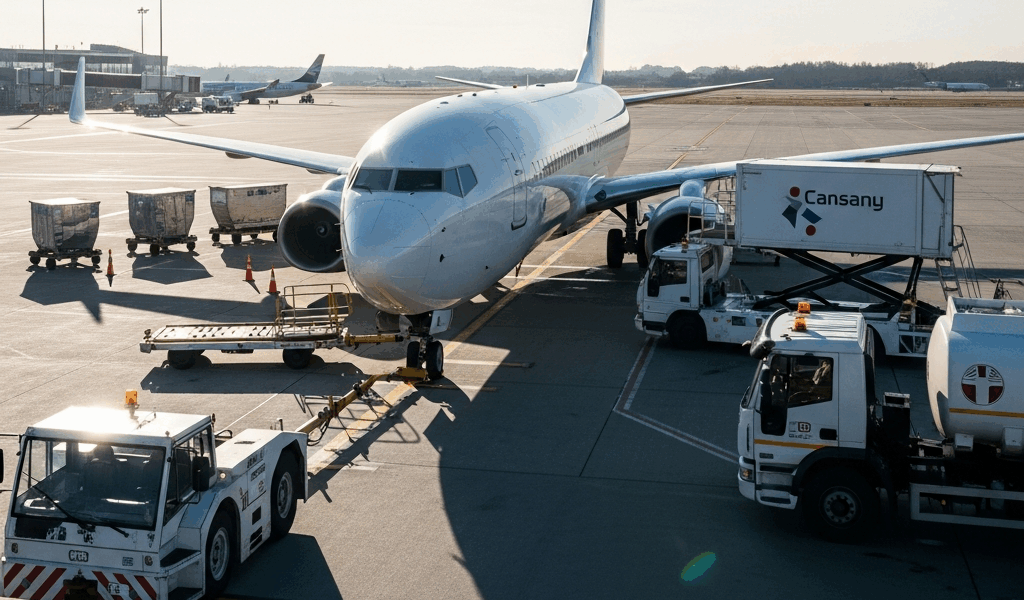
Boeing CEO Kelly Ortberg told CNBC on Monday that the company needs “a couple more years” to stabilize its finances before launching a next-generation narrowbody aircraft program. That puts him at odds with Airbus CEO Guillaume Faury, who announced a 2030 launch target for the European manufacturer’s A320 successor.
Speaking at the Farnborough International Airshow on July 20, Ortberg laid out three critical hurdles Boeing must clear: financial recovery, completion of existing programs including 737 MAX certification, and mature engine technology. “First of all, we have to be ready, and part of that is getting our financial house in order, and we’re working on that. It’s going to take a couple more years to get where we want to be,” he said. “I’m not going to launch a new program until we’re confident we have mature technology.”
That timeline puts Boeing’s entry-into-service window in the late 2030s at earliest—roughly 7–10 years behind Airbus. Airbus has been planning its eAction program since 2021 and expects to begin passenger operations in 2037 or 2038 following engine selection in 2027.
The Market Reality Check
Ortberg’s blunt assessment reflects hard-won lessons. The company’s rush to develop the 737 MAX in response to the Airbus A320neo has become an industry cautionary tale. Now Ortberg seems determined not to repeat that mistake. “I don’t think that the competition’s timing is an overly dramatic factor,” he told CNBC. “This is a decision that lasts 50 years. I don’t think you’ll see us panic in response to a competitive move.”
But Boeing faces real pressure. In October 2025, the A320 family surpassed the 737 to become the most-delivered commercial aircraft in history, exceeding 12,000 cumulative deliveries. Since launch in 2010, the A320neo program has logged more than 11,000 commitments. The 737 MAX—entering the market less than a year later—has captured just under 7,000 commitments.
When told Boeing’s timeline was “moving to the right,” Faury responded with a single word: “Perfect.” The Airbus CEO stressed that leading the single-aisle market demands decisive action. “We are preparing the successor of the A320, which we call eAction, with a view of launching the program in 2030. We want to be mastering the time. You don’t want to do this reacting to something else.”
What’s Next — The Technology Race
Both manufacturers are pursuing efficiency gains in the 20–30 percent range. They’re focusing on advanced wings, open-rotor engine integration, and sustainable aviation fuel compatibility. Airbus is exploring folding wingtips that would enable single-aisle spans around 45 meters—delivering major aerodynamic improvements while grappling with airport compatibility challenges. The company also plans to redesign supply chains from scratch to eliminate single points of failure and geographic risk concentration.
Boeing has begun preliminary design work through ecoDemonstrator flight tests in Moses Lake, Washington. There, Boeing, Lufthansa, and Rolls-Royce are evaluating a Next-Generation Inlet that reduces engine nacelle length without sacrificing noise performance. Ortberg confirmed Boeing is “evaluating trade studies” but lacks a firm configuration.
Both companies confront the same immediate reality: airlines have a 15,000-aircraft combined backlog equivalent to more than a decade of current production. Ortberg noted the market is “probably less ready today than it was a year ago,” with carriers focused on getting existing aircraft delivered while managing engine durability issues and spare parts shortages.
At Farnborough, Boeing secured a 100-aircraft 737 MAX order from SMBC Aviation Capital and regained self-certification authority from the FAA. Both moves suggest the near-term focus remains maximizing current-generation output, not launching the next one.


Leave a Reply