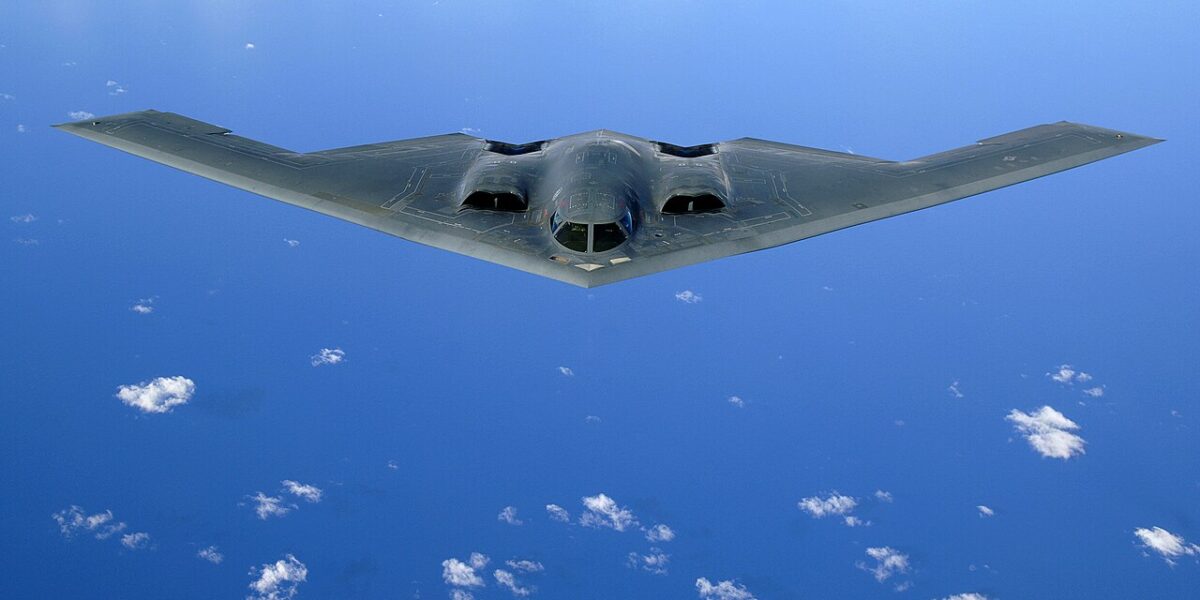
As the U.S. Air Force prepares to unveil more details about the B-21 Raider in 2026, questions about America’s stealth bomber fleet have surged—and one of the most searched topics reveals just how massive these aircraft really are. Here’s how the legendary B-2 Spirit compares to a football field.
The B-2 Spirit stealth bomber, which first flew in 1989 and remains one of the most advanced aircraft ever built, is genuinely enormous. Understanding its scale helps explain both its capabilities and the $2 billion price tag that made it the most expensive aircraft in history.
B-2 Spirit vs. Football Field: Direct Comparison
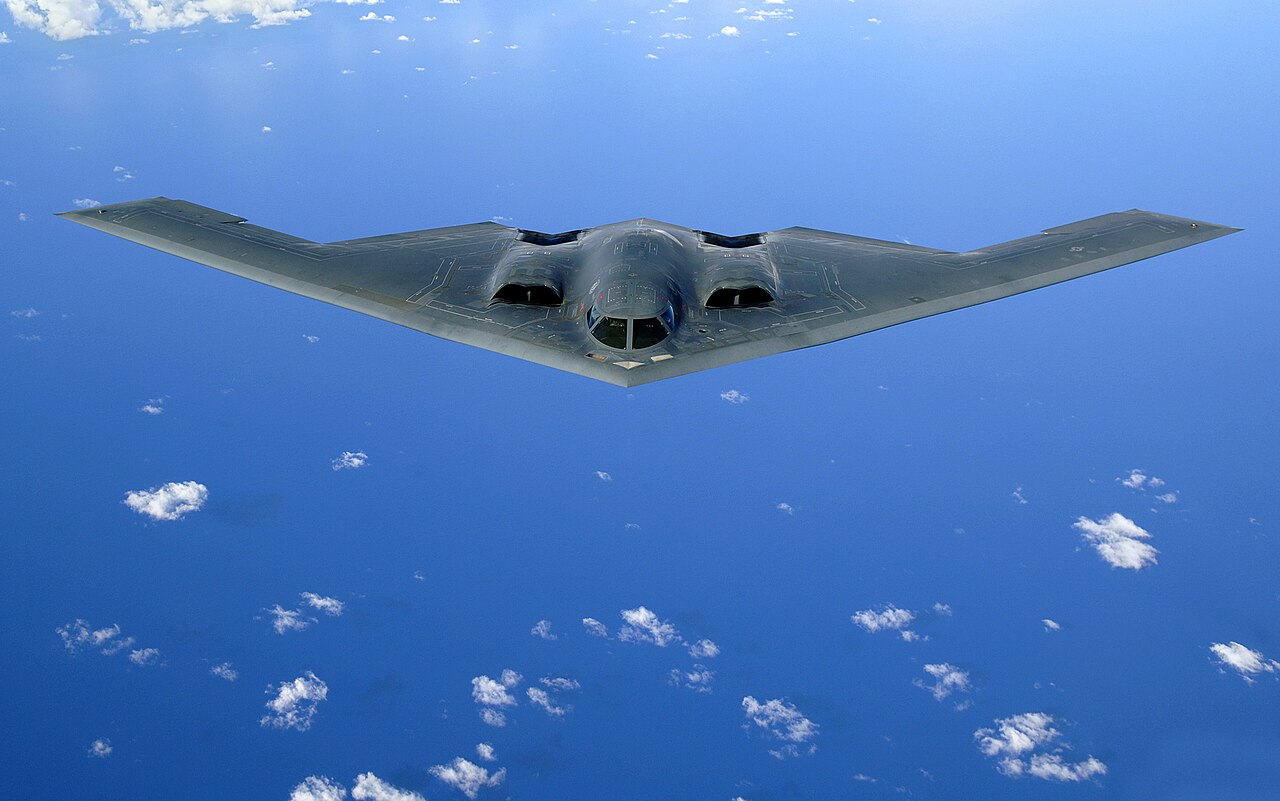
An NFL regulation football field measures 360 feet long (including end zones) and 160 feet wide.
The B-2 Spirit’s wingspan measures 172 feet—meaning the aircraft is actually wider than a football field by 12 feet.
| Dimension | B-2 Spirit | Football Field |
| Width/Wingspan | 172 feet | 160 feet |
| Length | 69 feet | 360 feet (with end zones) |
| Height | 17 feet | N/A |
| Area Coverage | ~5,140 sq ft | 57,600 sq ft |
Visual Perspective: If a B-2 Landed on a Football Field
Imagine a B-2 Spirit parked at the 50-yard line:
- The wingtips would extend 6 feet past each sideline
- The nose would reach approximately the 35-yard line
- The trailing edge would sit around the 58-yard line
- The aircraft would occupy roughly 9% of the field’s total area
This “flying wing” design—with no traditional fuselage or tail—creates the distinctive batlike silhouette that makes the B-2 instantly recognizable and virtually invisible to radar.
Why the B-2 Is So Large
The B-2’s enormous wingspan isn’t just for show—it’s essential to the aircraft’s mission:
1. Stealth Requirements
The flying wing design eliminates vertical surfaces that would reflect radar signals. Every edge and surface is carefully angled to deflect radar energy away from detection systems. A conventional bomber design simply cannot achieve the same radar cross-section.
2. Range and Payload
The B-2 can carry 40,000 pounds of ordnance over 6,000 nautical miles without refueling. That massive wing area generates the lift needed to carry heavy payloads across intercontinental distances. The aircraft’s combat radius exceeds that of any other bomber in service.
3. High-Altitude Performance
Operating at altitudes above 50,000 feet requires significant wing area to generate lift in thin air. The B-2’s design allows it to cruise at altitudes where most interceptors cannot efficiently operate.
Comparison to Other Bombers
| Aircraft | Wingspan | Length | vs. Football Field Width |
| B-2 Spirit | 172 ft | 69 ft | +12 ft wider |
| B-52 Stratofortress | 185 ft | 159 ft | +25 ft wider |
| B-1B Lancer | 137 ft (swept) | 146 ft | -23 ft narrower |
| B-21 Raider | ~150 ft (est.) | Classified | -10 ft narrower (est.) |
The B-21 Raider: A Smaller Successor
Northrop Grumman’s B-21 Raider, which completed its first flight in November 2023, appears to be somewhat smaller than the B-2. While exact dimensions remain classified, analysts estimate its wingspan at approximately 150 feet—still impressive, but notably narrower than its predecessor.
The Air Force plans to acquire at least 100 B-21s at roughly $700 million each, replacing both the B-2 fleet and eventually the aging B-1B Lancers. First operational capability is expected in the mid-2020s.
Only 20 B-2s Were Ever Built
Originally, the Air Force planned to purchase 132 B-2 bombers. The end of the Cold War and the aircraft’s staggering $2.1 billion per-unit cost (in 1997 dollars—over $4 billion adjusted for inflation) resulted in production being capped at just 21 aircraft.
Today, only 19 B-2s remain operational. One aircraft, Spirit of Kansas, was destroyed in a 2008 crash at Andersen Air Force Base in Guam—the most expensive aircraft accident in history. All operational B-2s are based at Whiteman Air Force Base in Missouri.
Why This Matters in 2026
As geopolitical tensions increase and the Air Force modernizes its bomber fleet, understanding these aircraft becomes increasingly relevant:
- B-2 bombers conducted strikes during operations in Kosovo, Afghanistan, Iraq, and Libya
- The aircraft remains central to U.S. nuclear deterrence strategy
- Recent upgrades have extended the B-2’s service life into the 2040s
- The B-21 program will determine the future of American strategic airpower
The B-2’s football-field-spanning wingspan isn’t just a piece of trivia—it’s a testament to the extraordinary engineering required to make a 336,500-pound aircraft invisible to radar while carrying enough firepower to change the course of conflicts half a world away.
The B-2 Spirit fleet is scheduled to remain operational until approximately 2040, when the B-21 Raider will fully assume its strategic mission.



Leave a Reply