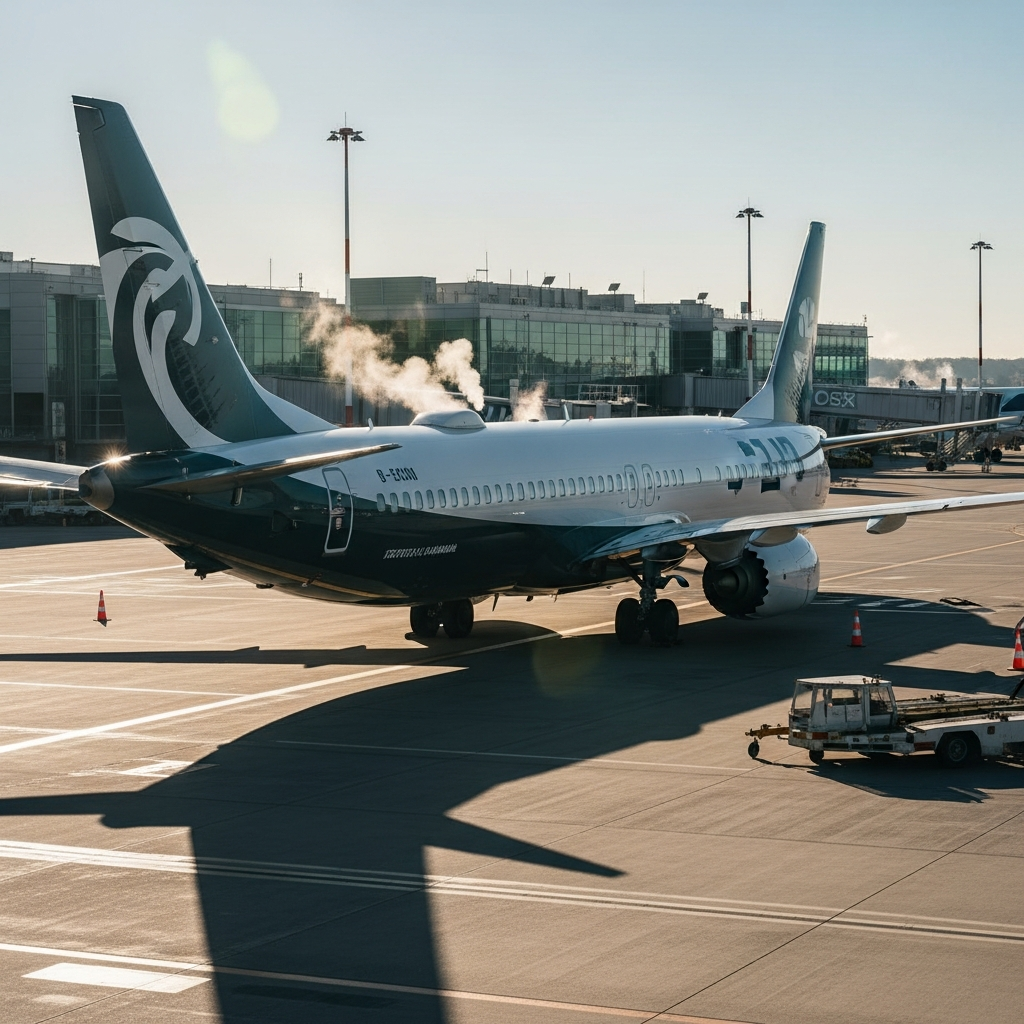
Boeing will fire up a fourth 737 MAX assembly line on July 6, 2026. It’s a milestone that matters: the first time in more than 50 years that the world’s best-selling commercial jet will be built anywhere but Renton, Washington. The new “North Line” at Boeing’s Everett facility signals the manufacturer’s push to recover from the March 2019 grounding and the quality crisis that erupted in January 2024.
CEO Kelly Ortberg announced the startup during a June 5 CNBC interview. “We’re adding another production line, it’s really a carbon copy of what you see here in Renton,” he said. “We’ll be loading our first airplane on July 6, so just about a month from now, we’ll be bringing that [fourth] line alive.”
The Everett North Line will start with the stretched 737 MAX 10—the longest variant at 43.8 meters, roughly 1.6 meters longer than the MAX 9. That matters because the MAX 10 accounts for about one-third of all MAX orders (approximately 1,400 aircraft) and remains critical to Boeing’s fight against Airbus’s A320 family. United Airlines and Ryanair are among the major carriers waiting for the variant, which seats 138 to 204 passengers depending on how it’s configured and can fly 3,300 to 3,850 nautical miles.
Production Ramp Targets Signal Confidence
The new line will operate under low-rate initial production (LRIP) protocols—a careful approach Ortberg has championed to sidestep the mistakes that plagued the pre-grounding era. Boeing’s three existing Renton lines are churning out 737 MAX aircraft at a 47-per-month rate, a jump from the 42-per-month ceiling the FAA raised to in October 2024. The company cleared the FAA’s capstone review for the higher rate in late May.
Once the North Line hits its stride, Boeing is targeting 52 aircraft per month across all four lines by 2027, eventually climbing to 63 per month long-term. Ortberg has shot down talk of hitting 70-per-month capacity, calling anything beyond 63 “under study” rather than a done deal.
“We’re not going to push airplanes out the door if we’re not stable and the production system isn’t producing a high-quality product,” Ortberg said. “We’re trying to reset that track record, and I think we’ve done a good job as we’ve come back up here in the last 18 months.”
Quality Gains Drive the Expansion
The decision to open a new line comes after Boeing posted real quality gains. The company completed its $4.7 billion reacquisition of Spirit AeroSystems in December 2025—bringing fuselage production back under one roof after a 20-year split—and defect rates have plummeted 40 percent compared with 2025 levels, according to CFO Jay Malave. Airlines have told Boeing that the latest aircraft represent “the highest-quality airplanes that they’ve ever received from Boeing,” Ortberg stated.
The Everett facility, which stopped building 747s in 2023, sits inside the world’s largest building by volume at 472 million cubic feet. Using that space for MAX assembly marks a historic production shift for a program that has delivered more than 10,000 aircraft since 1967.
What Comes Next
The FAA is expected to certify the MAX 10 before year-end, with flight testing wrapping up this summer. Boeing’s commercial backlog now tops 6,100 aircraft valued at $695 billion. The North Line’s success—and the broader production ramp—depends on the supply chain holding together. CFM International, the 50/50 joint venture between GE Aerospace and Safran, must keep LEAP-1B engine deliveries in sync with Boeing’s assembly pace.
We’ll continue tracking production metrics and quality indicators as the North Line comes online.
Sources
- CNBC Airlines
- Boeing Corporate Communications (June 5, 2026)
- FAA Statement — Administrator Bryan Bedford (May 28, 2026)
- Boeing Q1 2026 Earnings Report — CEO Kelly Ortberg
- Boeing Bernstein Conference Presentation (May 27, 2026)
Stay in the loop
Get the latest aircraft insider updates delivered to your inbox.