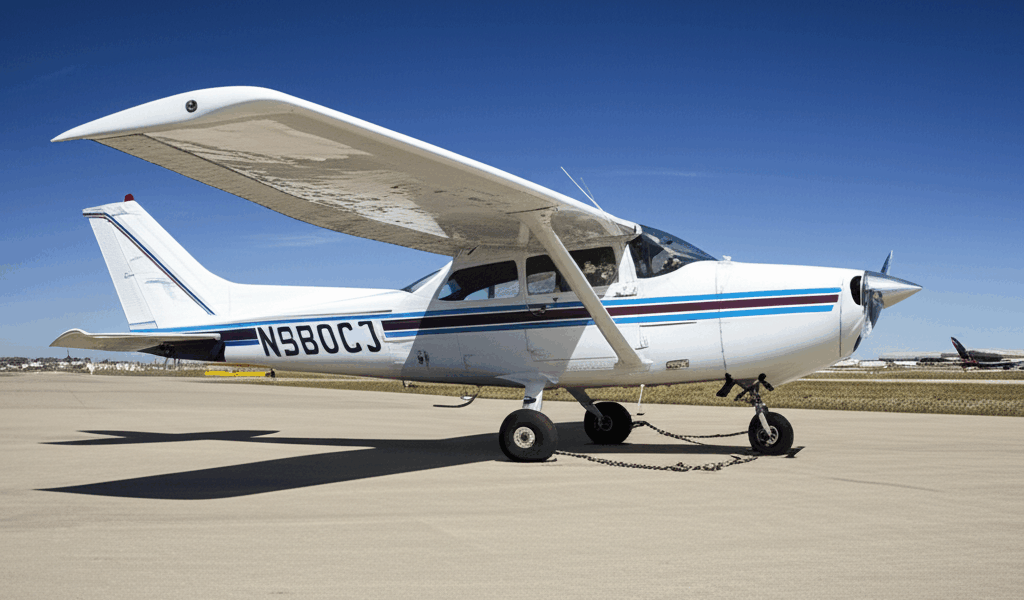
Here’s a question that has sparked more heated debates at flight school hangars than whether you should grease every landing: Should you learn to fly in a Cessna 172 or a Piper Cherokee?
I’ve watched student pilots agonize over this decision like they’re choosing a spouse. And honestly? It might matter less than you think—but for reasons nobody tells you upfront.
The Numbers Game (Where the 172 Flexes Hard)
Let’s start with raw production numbers because they reveal something important. Cessna has pumped out over 44,000 172s since 1955, making it the most manufactured aircraft in history. The Cherokee? A respectable 32,000 since 1960. That’s fourth place overall.
Those numbers matter beyond bragging rights. More aircraft means more available parts, more mechanics who’ve worked on them, and more training resources. Walk into almost any flight school in America and you’ll find a 172 on the line. The Cherokee? Maybe, maybe not.
But here’s what those numbers don’t tell you: about 20% of pilots who train in Cessnas feel uncomfortable switching to low-wing aircraft later. They’ve only ever looked down at the ground through a window above them. The Cherokee crowd? They transition to high-wings without much fuss.
What $80,000 to $550,000 Gets You
New Cessna 172 Skyhawks run between $430,000 and $550,000 with the Garmin G1000 glass cockpit. A new Piper Archer (the Cherokee’s modern evolution) costs roughly the same. But most student pilots aren’t buying new aircraft—they’re renting whatever the flight school has.
On the used market, things get interesting. A decent Cherokee PA-28-140 averages around $60,000. A comparable 172 from the same era? Typically $80,000 to $120,000. That 20-30% premium exists simply because more people learned in Cessnas and don’t want to change. It’s brand loyalty pricing, pure and simple.
If you’re thinking about buying a trainer someday, that price difference could fund your instrument rating.
High Wing vs Low Wing—The Real Differences
Sitting in a 172, you’re under the wing. The ground sprawls out below you like Google Earth with a prop in front. Turns around a point, S-turns, rectangular courses—every ground reference maneuver becomes almost intuitive because you just look out and down.
In a Cherokee, the wing blocks your downward view. You’ll crane your neck, bank the airplane, or use the little window on the wing root. It’s not impossible, it’s just different. Some instructors argue this makes you a more adaptable pilot.
But here’s the thing nobody mentions: that high wing on the 172 acts like a giant umbrella. Parked on a hot ramp in July, you’ll appreciate the shade. The Cherokee sits there baking like a greenhouse. Small comfort, literally.
The Fuel Management Gotcha
This is where the Cherokee separates the attentive pilots from the accident statistics.
The 172 uses a dead-simple gravity-fed fuel system. Select “BOTH” tanks and the engine burns equally from each wing. Set it and forget it.
The Cherokee requires manual tank switching every 30 minutes or so. Left tank, right tank, left tank, right tank. Forget to switch? You can run a tank dry while the other sits there full. This has killed pilots. NTSB reports are full of Cherokee fuel exhaustion accidents where the pilot simply forgot to rotate tanks.
Now, some instructors love this. “It teaches discipline,” they say. “It makes you a better systems manager.” They’re not wrong. But at 6 AM on your third pattern work session of the week, when you’re tired and focused on nailing that crosswind landing, fuel management adds cognitive load you might not want.
Handling Characteristics—Where Pilots Actually Disagree
The 172 flies like a training aircraft should: stable, predictable, forgiving. The controls feel a bit heavy but neutral. You can trim it for level flight and it’ll stay there. Students love this. Instructors love this. Insurance companies really love this.
The Cherokee’s elevator feels lighter, requiring smoother inputs. Some instructors claim this produces better stick-and-rudder pilots because ham-fisted inputs show up immediately. There’s probably something to that. The 172 lets you get away with more sloppiness.
For crosswind landings, the Cherokee has an edge. Its low wing creates a lower center of gravity, and the gear spreads wider than the 172’s narrow stance. In gusty conditions, the Cherokee plants more confidently. The 172 can get pushed around and tends to weather-vane more aggressively.
Safety Numbers That Might Surprise You
The Cessna 172 posts an overall accident rate of 3.3 per 100,000 hours with a fatal rate of 0.54 per 100,000 hours. Those numbers are genuinely excellent for general aviation. The Cherokee and Warrior family comes close but carries a slightly higher fatal accident rate.
Before you declare the 172 winner, consider this: that high wing makes post-crash egress difficult if you flip over. Pilots have drowned in 172s that ended up inverted in water. The Cherokee? Kick open the door and swim away. Low wings don’t trap you underneath.
Different risks, different scenarios. Neither aircraft is meaningfully “safer” than the other in any practical sense.
What Flight Schools Don’t Tell You
Most flight schools stock 172s because that’s what the insurance underwriters prefer and that’s what the training syllabi are written for. They’re not necessarily better training platforms—they’re just the path of least resistance.
Schools with Cherokees often offer lower hourly rates because their acquisition and insurance costs run lower. I’ve seen Cherokee time billed at $140/hour versus $175/hour for a 172 at the same field. Over a 60-hour private pilot curriculum, that’s a $2,100 difference.
The flip side: if you train exclusively in Cherokees and then try to rent a 172 somewhere else, you’ll need a checkout flight and possibly additional dual instruction. The same applies in reverse. Whichever aircraft you train in, you’re building habits specific to that type.
The Instructor Factor Nobody Discusses
Here’s the uncomfortable truth: your instructor matters more than the aircraft.
A mediocre CFI in a brand-new 172 with glass panels will produce worse outcomes than a skilled instructor in a beat-up 1972 Cherokee with steam gauges. The airplane is a tool. The teaching is the product.
I’ve known pilots who struggled through 80 hours to get their private in a 172 with a disengaged instructor, then switched to a Cherokee with a better CFI and suddenly everything clicked. Was it the aircraft? No. It was the instruction.
Before you obsess over 172 versus Cherokee, go take discovery flights with different instructors. Find someone whose teaching style works for your brain. Then fly whatever that person has access to.
The Real World Answer
Both aircraft have trained hundreds of thousands of pilots. Both will get you to a checkride. Both have quirks you’ll learn to manage.
If ground reference maneuvers seem challenging, the 172’s visibility helps. If budget matters and you can find cheaper Cherokee rates, that money saves toward your instrument rating. If you plan to eventually buy an airplane, starting in the type you’ll own makes sense.
But mostly? Pick the school with the best instructor, the most convenient schedule, and the most reliable aircraft. A 172 that’s always in maintenance doesn’t train you any better than a Cherokee that’s ready to fly.
The pilots who obsess over this decision for months are the same ones who will obsess over whether to buy a Bonanza or a Mooney someday, whether IFR or VFR is better, whether to fly GA or jump straight to ATP programs. They’re looking for certainty where none exists.
Pick one. Learn to fly it well. Move on to bigger decisions.
The sky doesn’t care what wing configuration trained you to reach it.
Join the Aircraft Insider Community
Get exclusive backcountry flying tips, aircraft reviews, and Western aviation destinations delivered to your inbox.
✈️ No spam, ever. Unsubscribe anytime. Privacy respected.



Leave a Reply