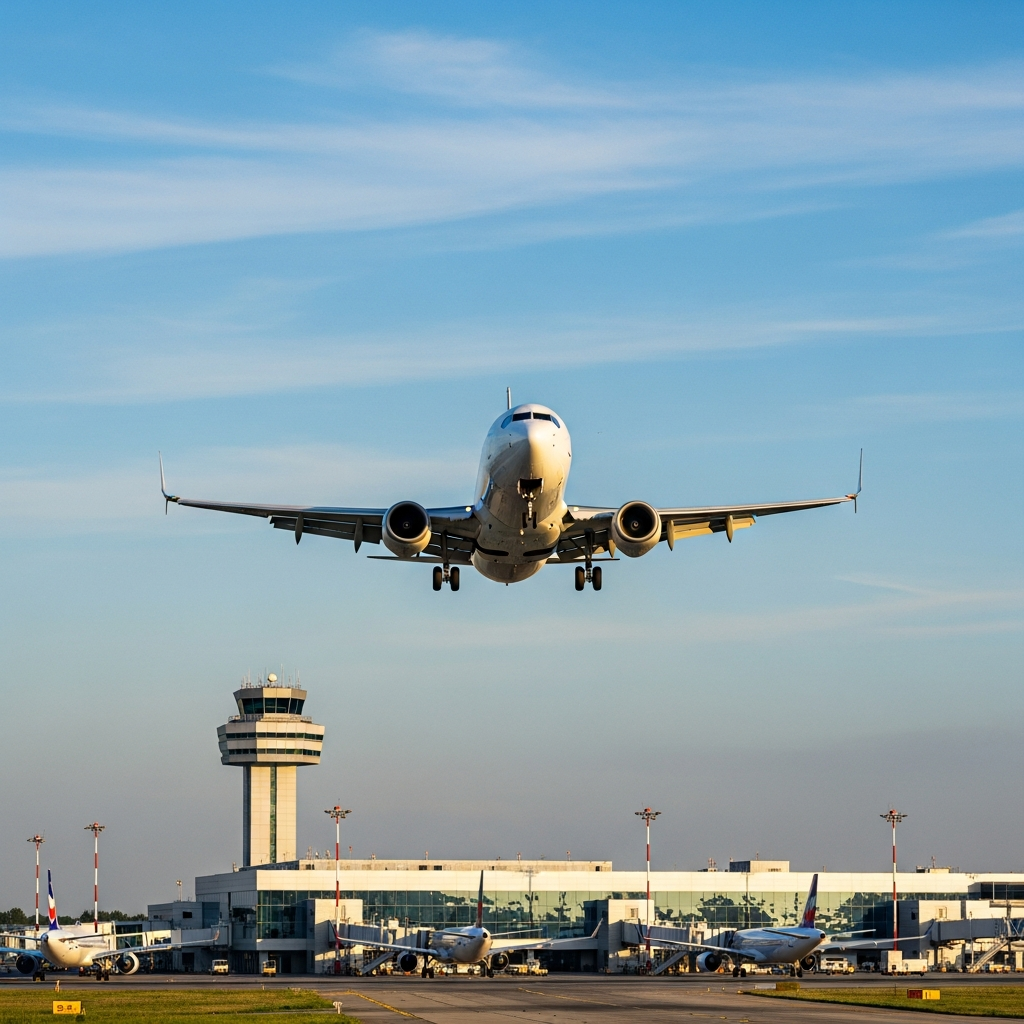
The FAA on April 16 imposed a hard cap of 2,708 daily operations at Chicago O’Hare International Airport for Summer 2026 — cutting nearly 300 flights from the roughly 3,000 airlines had planned to operate and putting a firm ceiling on what had been shaping up as a dangerous overcapacity crisis at one of the world’s busiest airports.
Signed by FAA Administrator Bryan Bedford and published in the Federal Register on April 20 as Order FAA-2013-0259, the limit runs from May 17 through October 24, 2026. It covers all scheduled operations between 6:00 a.m. and 11:59 p.m. CT. On peak days, airlines had filed as many as 3,080 daily operations, meaning the cap forces a reduction of up to 372 flights on the busiest days — roughly a 12 percent cut from published schedules.
Why the Cap Was Necessary
Two converging problems drove the FAA’s intervention. Air traffic controller staffing at ORD remains constrained, limiting how many aircraft the facility can safely sequence. The second issue — more operationally significant — is ongoing construction of the new Concourse D satellite terminal, which has gutted available taxiway capacity. Construction disruptions at O’Hare date to March 2023, with taxiway closures and rerouting work ongoing since then. Major work on Concourse D began in mid-2025, including demolition of existing taxiways. Excavation continues. Vertical construction is due to start this spring.
The $1.3 billion concourse is the first milestone in O’Hare’s broader $8.2 billion Terminal Area Plan and isn’t scheduled to open until late 2028.
The FAA found that surface movement — not runway throughput — is now the actual limiting factor at ORD. Summer 2025 made the consequences plain: of 247,929 departures that season, only 56 percent left without a delay, with the FAA attributing disruptions directly to taxiway closures and rerouting around active construction west of the main terminal.
How the Cap Is Structured
Carrier allocations are proportional to each airline’s approved IATA Northern Summer 2025 schedule, with half-hour sub-limits ranging from 30 to 84 operations. The FAA’s Slot Administration Office issued allocations directly to carriers. Foreign airlines fall outside the statutory scope of 49 U.S.C. § 41722 and are not subject to mandatory reductions, though the FAA said it would pursue voluntary cuts through the IATA process. Cargo, charter, and non-scheduled operations will be handled first-come, first-served pending both FAA and Chicago Department of Aviation approval.
The final 2,708 figure is notably higher than the 2,608 target the FAA floated in its March 18 reconvening notice. The Chicago Department of Aviation successfully argued that construction impacts this summer will be somewhat less severe than in 2025 — enough for the FAA to modestly relax the ceiling before finalizing the order.
United Takes the Heaviest Hit
United Airlines had announced plans in January for 750 peak daily departures from its O’Hare hub, with operational filings ultimately reaching as many as 780 daily flights. On May 1, it cut more than 100 of those flights to comply, trimming to roughly 650 daily departures. Even at that reduced figure, United is flying 11 percent more operations than it did in Summer 2025 — and the airline says it will carry 13 percent more passengers by deploying larger aircraft.
American Airlines expects to shed only around 40 daily arrivals and departures. That’s a reflection of its smaller hub footprint after losing five gates to United in October 2025.
“If you book a ticket, we want you and your family to have the certainty that you’ll fly without endless delays and cancellations. … Applying that same strategy at O’Hare — where unrealistic schedules were set to dramatically exceed what they could handle — will reduce delays and make this busy summer travel season a little easier.”
— Transportation Secretary Sean Duffy
“Our number one priority is the safety of the flying public, and that means ensuring airline schedules reflect what the system can safely handle. … We appreciate the airlines working together with us to reach a responsible level of operations that strengthens safety and delivers a more reliable travel experience for the American public.”
— FAA Administrator Bryan Bedford
“We are pleased to have secured a sufficient level of flights through the FAA’s process to operate a successful hub at O’Hare this summer and satisfy American’s strategic objectives,” an American Airlines spokesperson said.
What to Watch
The cap expires October 24 — the same day the Summer 2026 scheduling season closes. Construction on Concourse D is expected to remain active through 2028, meaning the taxiway environment that triggered this intervention won’t improve significantly before the FAA must evaluate Summer 2027 schedules. If United presses ahead with further hub growth next year and construction milestones slip, another 41722 proceeding is a realistic outcome. On-time performance at ORD through the summer will be worth watching against the Summer 2025 baseline the FAA used to calibrate this cap.


Stay in the loop
Get the latest aircraft insider updates delivered to your inbox.