Last fact check: July 30, 2026
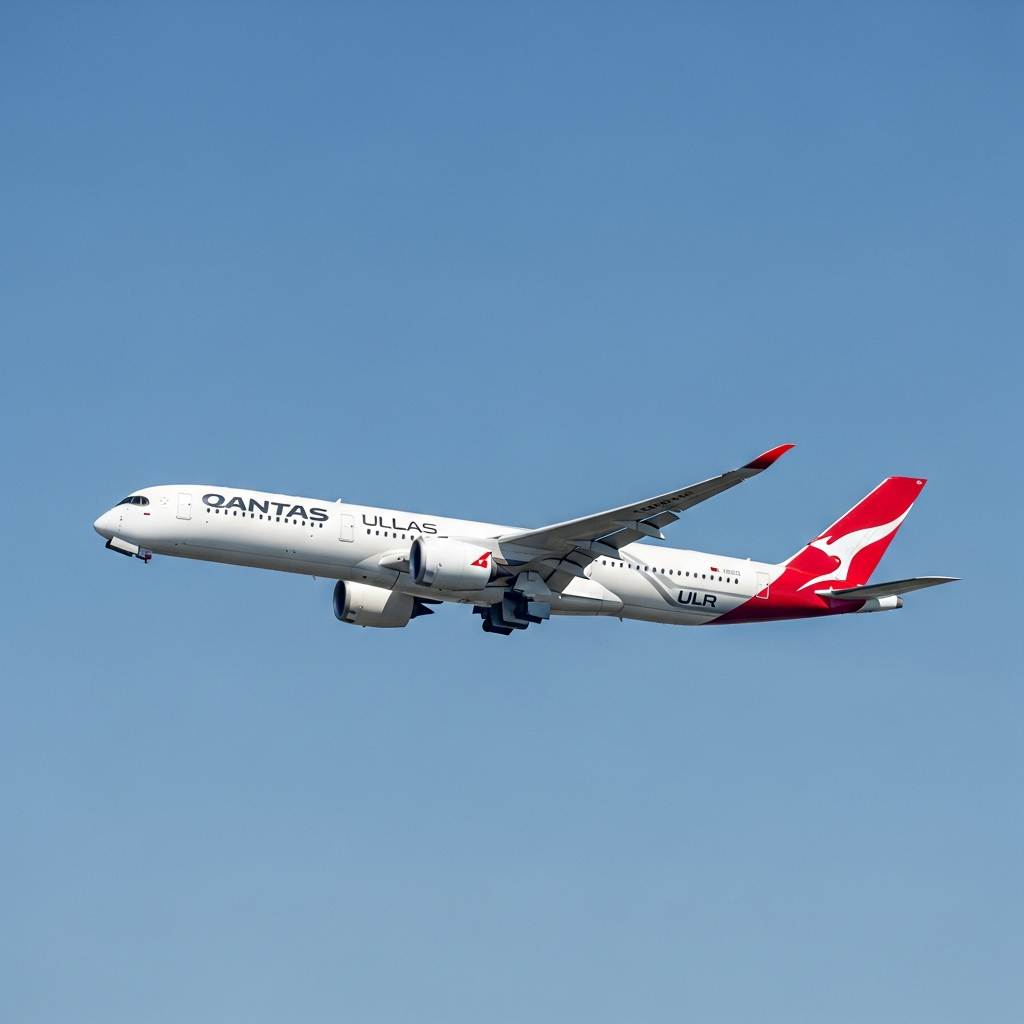
Qantas Project Sunrise is scheduled to begin with nonstop Sydney–London service in October 2027, not 2026. The airline will use a specially modified Airbus A350-1000ULR designed for flights of almost 10,000 nautical miles and as long as 22 hours.
The program has moved beyond assembly and into flight testing. The first A350-1000ULR test aircraft, MSN707, flew for the first time on June 2, 2026. In July, it completed an exceptionally long development flight between Toulouse and Melbourne as Airbus tested the extra fuel system and cabin environment.
The first customer-delivery aircraft is a different airframe. Airbus says that aircraft is scheduled for delivery to Qantas in April 2027. Qantas plans to place Sydney–London tickets on sale before the October launch, but certification, regulatory approvals and aircraft delivery remain conditions of the schedule.
Project Sunrise status at a glance
| Milestone | Current status |
|---|---|
| Aircraft | Airbus A350-1000ULR |
| Aircraft ordered | 12 A350-1000ULRs |
| Test aircraft first flight | June 2, 2026 |
| First planned delivery | April 2027 |
| First planned route | Sydney–London nonstop |
| Planned service launch | October 2027 |
| Next planned route | Sydney–New York nonstop |
| Passenger capacity | 238 seats |
| Maximum mission duration | Up to about 22 hours |
| Extra fuel capacity | Approximately 20,000 litres |
Dates remain subject to aircraft certification, regulatory approvals and delivery.
What is Qantas Project Sunrise?
Project Sunrise is Qantas' plan to connect Australia's east coast directly with London and New York. Qantas launched the aircraft challenge in 2017 and selected the A350-1000 in 2022.
The name recalls Qantas' “Double Sunrise” Catalina services during World War II. Those long Indian Ocean flights were timed so that passengers saw two sunrises. The modern project addresses the same geographic problem with a purpose-built long-range airliner rather than a multi-stop journey.
Sydney–London will be the first route. Qantas says the nonstop flight could save up to four hours compared with its present one-stop service. Sydney–New York is planned to follow, although Qantas has not committed to a public launch date for that second route.
Project Sunrise will supplement rather than replace Qantas' Perth–London and Sydney–Singapore–London services. Passengers will therefore retain one-stop and nonstop choices.
What makes the A350-1000ULR different?
The A350-1000ULR is based on the standard Airbus A350-1000, but it has changes needed for the longer mission.
The most important modification is an additional rear-centre fuel tank holding about 20,000 litres. Airbus also modified the fuel system, increased maximum takeoff weight and introduced a different galley refrigeration architecture. The aircraft uses two Rolls-Royce Trent XWB-97 engines.
Airbus says the extra tank extends the standard A350-1000's range by roughly 1,000 nautical miles while retaining fuel reserves for holding and diversion. Qantas lists an 8,800-nautical-mile flying range for its aircraft, while the actual route and fuel planning will vary with winds, payload, reserves and diversion requirements.
That distinction matters. “Up to 22 hours” describes the intended operating mission, not a promise that every flight will remain airborne for exactly 22 hours. Airbus designed its July development flight to demonstrate a 23-hour block-time capability around Qantas' intended 21-hour-and-40-minute mission.
Flight testing and certification
MSN707 began the A350-1000ULR flight campaign on June 2, 2026. Airbus fitted the production aircraft with approximately five tonnes of temporary test equipment, more than 1,000 sensors and a flight-test engineer station.
The work focuses on systems changed for the ULR variant:
- fuel flow, temperature and oxygen concentration in the rear-centre tank
- fuel management across a very long mission
- cabin temperature and ventilation with a full passenger heat load
- the new localised galley refrigeration system
- aircraft performance at the variant's higher operating weights
In July, MSN707 flew nonstop from Toulouse to Melbourne and later returned to Toulouse with Qantas pilots aboard. Airbus reported that the outbound development flight covered 12,460 nautical miles in 24 hours and 24 minutes. That was a test mission, not a preview of scheduled passenger flight time or a new commercial route.
The test aircraft is expected to enter Qantas service after its instrumentation is removed and its cabin is completed. It is not, however, the airframe Airbus currently identifies as the first delivery. Airbus says a second A350-1000ULR is scheduled for delivery in April 2027.
The 238-seat Project Sunrise cabin
Qantas chose a low-density, four-class layout with 238 seats. That is substantially fewer seats than many A350-1000 configurations and leaves space for premium cabins and a dedicated Wellbeing Zone.
| Cabin | Seats | Layout or defining feature |
|---|---|---|
| First | 6 | Enclosed 1-1-1 suites with separate bed and chair |
| Business | 52 | 1-2-1 suites with sliding doors |
| Premium Economy | 40 | 2-4-2 seating with leg and calf support |
| Economy | 140 | 3-3-3, including 42 Economy Plus seats |
First and Business seats convert into 80-inch beds. Qantas says Economy Plus will have 34 inches of pitch, priority boarding and priority access to overhead space. Across the aircraft, more than 70 percent of seats will offer at least 33 inches of pitch.
The airline is also introducing meal preselection, Bluetooth audio and fast inflight Wi-Fi across all cabins. Its onboard journey planner will show meal and rest periods so passengers can coordinate sleep with the cabin schedule.
These features are announced product specifications. Exact pricing, seat-selection eligibility and onboard service can still change before tickets go on sale.
What is the Wellbeing Zone?
The Wellbeing Zone is a small shared area between Premium Economy and Economy. It includes stretch handles, guided movement content, a hydration station and refreshments.
It is not a lounge or an exercise room. Its purpose is to give passengers a place to stand, stretch and hydrate during an unusually long flight.
Qantas developed the broader cabin program with the University of Sydney's Charles Perkins Centre and Caon Design. Lighting, meal timing and movement guidance are intended to help passengers adapt to destination time. These measures may make the flight more comfortable, but they do not eliminate jet lag.
When will Sydney–London nonstop flights start?
Qantas says Sydney–London Project Sunrise service is scheduled to begin in October 2027. The first aircraft is scheduled for delivery in April 2027, giving the airline time for crew training, proving activity and operational preparation.
Tickets are not yet on sale. Qantas states that delivery, sales and service commencement depend on certification and regulatory approvals. Treat October 2027 as the current target rather than an unconditional guarantee.
Sydney–New York is the second announced Project Sunrise route. Qantas has not published a firm start date for it.
How long will the flights take?
Qantas and Airbus describe Project Sunrise missions as lasting up to about 22 hours. Actual scheduled time will depend on route, winds and operating conditions.
The direct Sydney–London journey is expected to reduce total travel time by up to four hours compared with a one-stop itinerary. The main benefit is eliminating the connection; the time aboard the same aircraft will be much longer than on either sector of a conventional one-stop trip.
Project Sunrise questions
Is Project Sunrise operating now?
No. Flight testing is underway, but Qantas plans to begin Sydney–London passenger service in October 2027.
Has the first Qantas A350-1000ULR flown?
The first test aircraft, MSN707, flew on June 2, 2026. Airbus says a second aircraft will be the first delivered to Qantas, currently planned for April 2027.
Will Project Sunrise fly nonstop to New York?
Yes, Sydney–New York is the second announced route. Qantas has not published a firm launch date.
How many passengers will the aircraft carry?
The Qantas A350-1000ULR will have 238 seats: six First, 52 Business, 40 Premium Economy and 140 Economy seats.
Is the A350-1000ULR the same as the A350-900ULR?
No. The A350-1000ULR is based on the larger A350-1000 and was developed for Qantas. The A350-900ULR is the smaller variant used by Singapore Airlines on ultra-long-haul routes.
The bottom line
Project Sunrise has reached flight testing, but it has not yet reached passenger service. The current plan is an April 2027 first delivery followed by a Sydney–London launch in October 2027, subject to certification and approvals.
The most consequential parts of the program are now concrete: a modified A350-1000ULR with extra fuel capacity, a 238-seat cabin, a completed first flight and a long-range development mission. The remaining questions are certification timing, delivery, ticket sales and the eventual Sydney–New York schedule.
Stay in the loop
Get the latest aircraft insider updates delivered to your inbox.