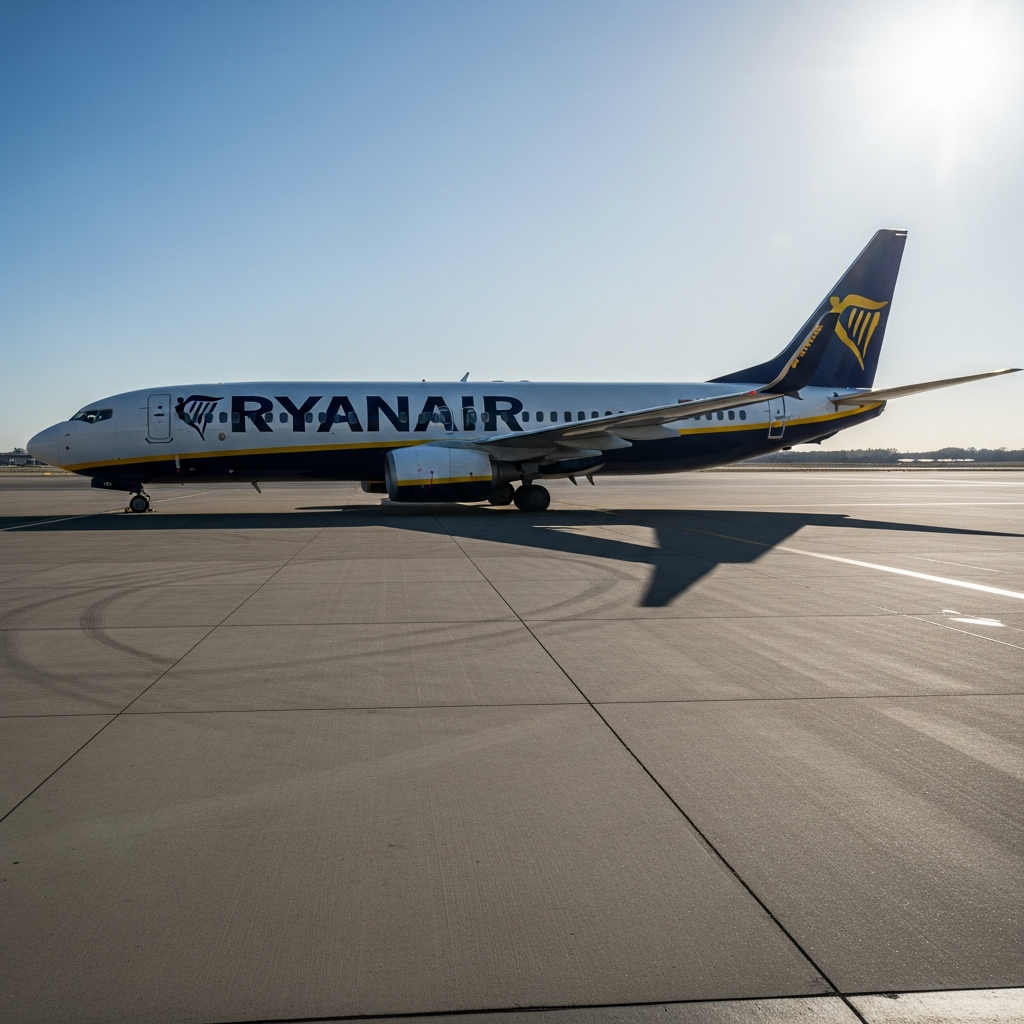
Ryanair will shut its seven-aircraft Berlin base on October 24, 2026. The airline confirmed the decision on April 24, calling Berlin Brandenburg Airport the “worst recovering airport in Europe since the pandemic” — and pointing to a 27% traffic collapse that has dragged the German capital’s passenger numbers from 36 million in 2019 down to just 26 million last year.
CEO Eddie Wilson and Chief Commercial Officer Jason McGuinness delivered the news at a Berlin press conference. It’s the fourth German base closure Ryanair has made since 2019, following withdrawals from Frankfurt, Düsseldorf, and Stuttgart. Germany now has 20 fewer Ryanair aircraft than it did before the pandemic. Dresden, Leipzig, and Dortmund have already lost all Ryanair service entirely.
The Cost Stack That Broke the Base
The numbers tell a grim story. Aviation tax has doubled since 2019 — from €7.30 to €15.50 per passenger. Security fees are headed the same direction, rising from €10 in 2024 to €20 per passenger by January 2028. Air traffic control fees have tripled to €3.30 per passenger. Airport fees at BER have climbed 50% since COVID, with a further 10% increase now confirmed through 2029.
Wilson didn’t mince words.
“Despite Berlin Airport losing 30% of its pre-Covid traffic thanks to its excessive airport charges, and Germany’s stupid aviation tax regime, they have now decided to increase charges by a further 10% — which will result in the loss of more than 2 million Ryanair seats per annum and 7 based aircraft.”
“German aviation is broken.”
— Eddie Wilson, CEO, Ryanair
Berlin Brandenburg Airport pushed back the same day, posting on X that it was “surprised by Ryanair’s announcement at this point in time” and insisting that “an increase in airport charges is not planned.” The gap between those two positions is now very public, and very wide.
Fleet and Operational Impact
The seven Boeing 737s — drawn from Ryanair’s core fleet of 410 Boeing 737-800s, each configured in a single-class 189-seat layout — will be reassigned immediately when the IATA winter 2026–27 season opens on October 24. They’re headed to lower-cost bases in Sweden, Slovakia, Albania, and Italy. Ryanair will keep flying Berlin routes using aircraft based outside Germany, but the schedule shrinks by roughly 50%. Passenger throughput at BER is projected to fall from 4.5 million to approximately 2.2 million by 2027 — a loss of more than 2 million seats a year.
Around 200 Berlin-based pilots and cabin crew have already received formal closure notification. Staff consultations are set to begin shortly, with relocation offers to other expanding European bases on the table.
Wilson also took aim at BER’s night flight curfew — a constraint on aircraft utilization that hits ultra-low-cost carriers particularly hard, given their reliance on maximum daily cycles across point-to-point operations.
Germany’s Aviation Retreat in Numbers
Germany is running at just 88% of pre-COVID traffic levels, making it one of the weakest recovering aviation markets on the continent. The German Federal Cabinet approved an aviation tax cut on April 1, 2026 — trimming the short-haul rate from €15.53 to €13.03, effective July 1 — but the Board of Airline Representatives in Germany (BARIG) called it “far too small,” noting it doesn’t even restore rates to pre-2024 levels. Ryanair has treated it the same way: a partial correction that changes nothing about the broader cost trajectory.
BER posted a net loss of €212 million in 2023, even as it achieved positive operating results — a direct consequence of the airport’s construction debt. Final costs ballooned from an original €2 billion estimate to more than €7 billion including interest, after the airport opened approximately 9 years late in October 2020, having begun construction in 2006.
What to Watch
The October 24 base closure is locked in unless BER or the German government moves decisively on fees before that date — something Ryanair’s public posture makes clear it considers unlikely. The airline is growing its overall European network to 216 million passengers annually while simultaneously retreating from Germany. Berlin’s slide from growth market to cautionary tale is accelerating. If the cost structure stays unchanged heading into 2027, further LCC capacity withdrawals at BER look increasingly hard to avoid.


Stay in the loop
Get the latest aircraft insider updates delivered to your inbox.