Last fact check: July 30, 2026
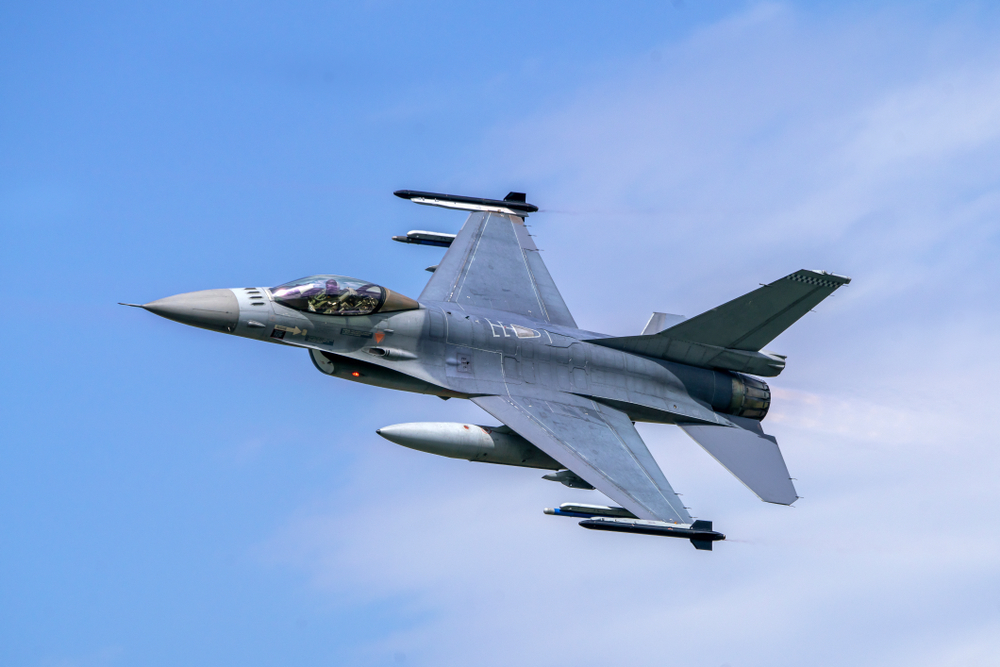
A new fighter jet generally costs tens of millions of dollars, and many current Western programs exceed $100 million per aircraft once procurement and initial support are included. There is no honest single price range, however, because “fighter jet cost” can refer to at least four different things.
For a useful benchmark, Lockheed Martin lists an average flyaway cost of $82.5 million for the F-35A in production Lots 15 through 17. By contrast, the U.S. Department of Defense’s fiscal 2026 F-15EX procurement request totals about $3.02 billion for 21 aircraft—approximately $143.7 million per aircraft when that entire procurement line is divided by quantity.
Those figures are not directly equivalent. The F-35 number is a flyaway figure, while the F-15EX line includes more than the bare aircraft. This guide keeps those categories separate and identifies figures that cannot be verified from transparent public contracts.
Fighter jet costs at a glance
| Aircraft | Best public cost indicator | What the figure represents |
|---|---|---|
| F-35A | $82.5 million | Average flyaway cost, Lots 15–17 |
| F-35B | $109 million | Average flyaway cost, Lots 15–17 |
| F-35C | $102.1 million | Average flyaway cost, Lots 15–17 |
| F-15EX | About $143.7 million | FY2026 procurement funding divided by 21 aircraft; not a flyaway price |
| F/A-18E/F Super Hornet | $1.3 billion for 17 | 2024 contract also includes a technical-data package; not a clean unit price |
| F-22A Raptor | No current purchase price | Production ended; GAO calculated a historical $412 million program acquisition unit cost |
| F-16 Block 70/72 | $5.58 billion for 20 in a proposed Philippine package | Includes engines, spares, weapons, support and training; not a unit price |
| Gripen E/F | €3.1 billion for 17 in Colombia’s contract | Includes aircraft, equipment, weapons, training and services |
| Rafale, Typhoon, Su-35, Su-57 and J-20 | No single comparable public price | Configuration, package contents, currency, disclosure and contract terms vary |
All figures are nominal amounts reported by their sources. Historical dollars, euros and current U.S. budget figures have not been converted into one base year, so the table should not be used as an inflation-adjusted ranking.
What does “unit cost” actually mean?
Price lists often put unlike figures in one column. Before comparing aircraft, identify which of these measurements the source is using.
Flyaway cost
Flyaway cost generally covers the aircraft, installed engine, mission systems and other hardware needed to leave the factory. It excludes many expenses required to create and operate a combat-ready fleet.
This is usually the closest answer to “What does one new jet cost to build?” It is not the buyer’s complete bill.
Procurement unit cost
Procurement funding can include the aircraft plus government-furnished equipment, support equipment, training devices, initial spares, engineering, program management and other items bought in that fiscal year.
Dividing a procurement line by the number of aircraft produces a useful budget-per-aircraft indicator, but it should not be relabeled as a flyaway price.
Program acquisition unit cost
Program acquisition unit cost, or PAUC, spreads research, development, testing, procurement and related acquisition spending across the total number of aircraft.
PAUC can be much higher than flyaway cost, especially when development is expensive or the planned fleet becomes smaller. It is useful for understanding what taxpayers invested in the program, not what another copy would have cost near the end of production.
Export package value
International fighter deals can bundle aircraft with spare engines, weapons, simulators, pilot and maintainer training, construction, software, technical support and years of sustainment.
Dividing the headline deal value by aircraft quantity creates a package-per-aircraft ratio. It does not reveal the airframe price.
How much does an F-35 cost?
Lockheed Martin publishes these average flyaway figures for production Lots 15 through 17:
- F-35A: $82.5 million
- F-35B: $109 million
- F-35C: $102.1 million
The F-35A uses conventional runways. The F-35B’s short-takeoff and vertical-landing system adds complexity, while the carrier-capable F-35C has a larger wing and naval equipment.
These figures should not be confused with the program’s full acquisition cost. The Congressional Research Service reported that, as of December 2023, the F-35 program’s average procurement unit cost was $132.7 million and its program acquisition unit cost was $162.4 million, both expressed in constant 2012 dollars. Those averages incorporate broader categories of spending and are not current showroom prices.
The Pentagon awarded a not-to-exceed $11.76 billion action for 145 Lot 18 aircraft in December 2024. That action included several variants, U.S. and international customers, and tooling support. Dividing it by 145 does not produce an official price for any one F-35 variant.
How much does an F-15EX cost?
The fiscal 2026 Department of Defense weapon-systems book lists approximately $3.018 billion in F-15EX procurement for 21 aircraft. That equals about $143.7 million for each aircraft when the full procurement line is divided by quantity.
The Air Force’s detailed budget explains why that should not be called a simple aircraft price. The line includes:
- the airframe and two F110-GE-129 engines per aircraft
- Eagle Passive Active Warning Survivability System equipment
- radars and other government-furnished equipment
- pylons, conformal fuel tanks and mission equipment
- program, field and logistics support
- training and support equipment
The live version of this article gives the F-15EX a price of $87.7 million without defining the cost category or citing a contract. That number should not be retained as a current all-in cost.
How much does a Super Hornet cost?
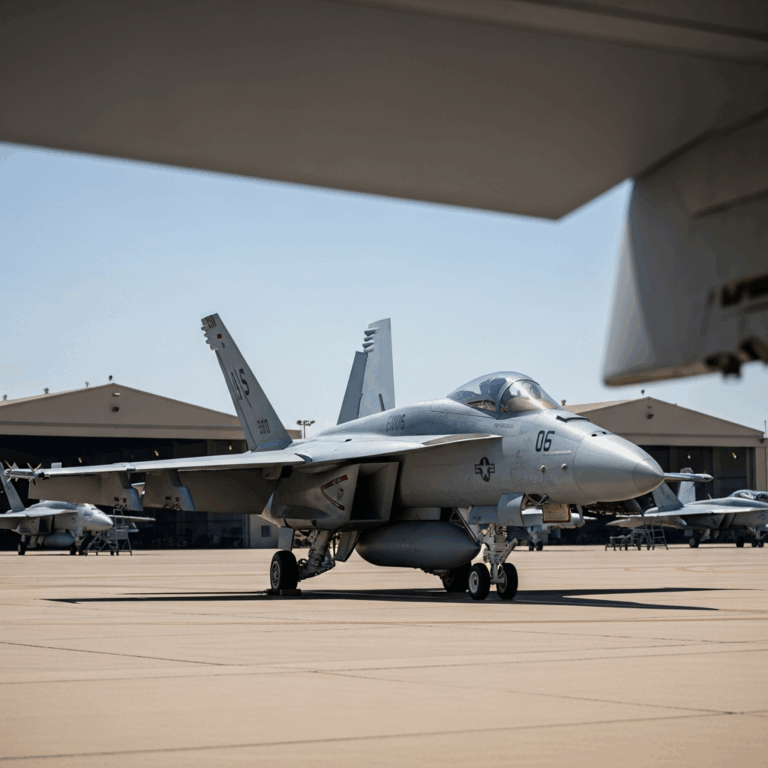
In March 2024, the U.S. Navy awarded Boeing a $1.3 billion contract action for 17 new Block III F/A-18E/F Super Hornets and a technical-data package needed for long-term sustainment.
A straight division equals about $76.5 million per aircraft, but that is not an official unit price because an unspecified portion of the award pays for the data package. The defensible statement is therefore “$1.3 billion for 17 aircraft plus technical data,” not “each aircraft cost $76.5 million.”
An earlier multiyear contract, announced in 2019, covered 78 aircraft for approximately $4 billion. Production lot, inflation, contract scope and quantity all affect the result, which is why a historical average should not be presented as today’s retail price.
How much did the F-22 Raptor cost?
You cannot buy a new-production F-22 at a current unit price. The United States ended production after buying 187 operational aircraft, and the production system no longer has a live price for another copy.
Historical figures also vary by definition. In a 2011 assessment, the U.S. Government Accountability Office calculated that the F-22’s program acquisition unit cost had risen to $412 million per aircraft as the planned quantity fell to 188. That figure spreads acquisition-program spending across the fleet; it is not the late-production flyaway cost.
Claims that an F-22 “costs” one particular amount should therefore say the year, dollar basis and cost category. A current F-22 modernization budget is also not a purchase price for a new aircraft.
How much does an F-16 Block 70/72 cost?
The current F-16 remains available as the Block 70/72, but public export packages show why the frequently repeated $30 million range is misleading.
In April 2025, the U.S. Defense Security Cooperation Agency approved a possible $5.58 billion sale to the Philippines covering:
- 16 single-seat F-16C and four two-seat F-16D aircraft
- 20 installed engines and four spares
- radars, electronic-warfare equipment and other systems
- air-to-air and air-to-ground weapons
- spare parts, training, support and documentation
That package is equivalent to $279 million per aircraft if divided by 20, but an F-16 itself does not cost $279 million. The ratio includes the broader capability package and represents a possible maximum sale, not necessarily the final signed amount.
The responsible conclusion is that a current F-16 airframe does not have a universal public price. Customer configuration and package contents determine the contract.
How much does a Gripen E/F cost?
Saab announced a €3.1 billion Colombian contract for 17 Gripen E/F aircraft in November 2025. It covers 15 Gripen E single-seaters, two Gripen F two-seaters, associated equipment and weapons, training and services.
The headline ratio is approximately €182.4 million per aircraft, but again that is a package ratio, not Saab’s bare-aircraft price. Currency movements also make a casual comparison with dollar-denominated U.S. contracts unreliable.
What about the Rafale and Eurofighter Typhoon?
Dassault Rafale and Eurofighter Typhoon sales are negotiated government and industrial packages. Aircraft configuration, weapons, support, industrial participation and local infrastructure can represent large portions of the announced value.
The live article’s precise Rafale variant prices and $90–120 million Typhoon range are not tied to an identified contract, year or cost definition. They should be removed rather than presented as current facts.
A better way to evaluate a Rafale or Typhoon deal is to report:
- the signed or proposed total value
- the number and variants of aircraft
- everything explicitly included in the package
- the announcement date and currency
- whether the figure is an authorization ceiling or a final contract
How much do the Su-35, Su-57 and J-20 cost?
Reliable, comparable unit costs for Russia’s Su-35 and Su-57 and China’s J-20 are not available from transparent public procurement documentation.
Online estimates often repeat one another without identifying whether they refer to domestic procurement, an export package, a historical ruble or yuan conversion, or a claimed flyaway cost. Currency controls, sanctions, state-owned industry and undisclosed development subsidies make direct comparison even harder.
The live article currently gives the Su-35 a $40–65 million range, the Su-57 a $50 million price and the J-20 a $110 million price. Without traceable contracts and cost definitions, those figures imply more certainty than the public evidence supports. They should be labeled “not publicly verifiable,” not ranked alongside documented Western costs.
What is included when a country buys fighter jets?
The aircraft can be only one part of the initial investment. A new operator may also need:
- spare engines and replacement parts
- missiles, bombs, gun ammunition and training rounds
- simulators and courseware
- pilot and maintainer training
- mission-planning and intelligence systems
- cryptographic and communications equipment
- hangars, secure facilities and runway work
- ground-support and test equipment
- contractor logistics and field representatives
- software, upgrades and technical publications
Weapons can materially change the deal value. So can the length of the support period and whether the customer already operates the aircraft family.
Purchase price is not lifetime cost
Acquisition is only the beginning. A fighter fleet consumes fuel, spare parts, depot maintenance, software support, engine overhauls, personnel, training hours and infrastructure throughout decades of service.
Cost per flying hour can be useful for planning, but those figures also require care. Different organizations include different expenses, fleet ages, readiness levels and annual flying hours. A contractor estimate, a military reimbursable rate and a government cost-per-tail-per-year figure may answer different questions.
Do not multiply one published hourly rate by an assumed service life and call the result the aircraft’s exact lifetime cost.
Which fighter jet is the cheapest?
There is no defensible universal winner without defining the mission and cost category.
A lower-cost aircraft may need more sorties or external support to perform a mission. A higher flyaway price may include sensors or survivability that would otherwise require separate assets. A nation already operating one type may save billions by avoiding a second training, logistics and infrastructure system.
For a fair comparison, use the same:
- fiscal year and currency basis
- flyaway, procurement or lifecycle-cost definition
- weapons and support assumptions
- annual flying-hour and service-life assumptions
- mission and readiness requirement
Bottom line
The best-supported current public flyaway figures in this comparison are $82.5 million for the F-35A, $109 million for the F-35B and $102.1 million for the F-35C in Lots 15 through 17.
Other headline numbers often describe broader procurement lines or export packages. The fiscal 2026 F-15EX procurement request averages about $143.7 million across 21 aircraft, but it includes equipment and support. The $5.58 billion Philippine F-16 proposal and €3.1 billion Colombian Gripen contract likewise include far more than airframes.
Always ask two questions before repeating a fighter-jet price: “What is included?” and “What year and cost definition does the figure use?” Without those answers, the number is more likely to mislead than inform.
Related Aircraft Insider guides
Primary sources
- Lockheed Martin: F-35 production Lots 15–17 costs
- Congressional Research Service: F-35 background and costs
- Department of Defense: FY2026 weapon-system acquisition costs (PDF)
- Air Force: FY2026 aircraft procurement details (PDF)
- NAVAIR: 2024 Super Hornet contract
- GAO: historical F-22 program acquisition cost
- DSCA: proposed Philippine F-16 package (PDF)
- Saab: Colombian Gripen E/F contract
Stay in the loop
Get the latest aircraft insider updates delivered to your inbox.