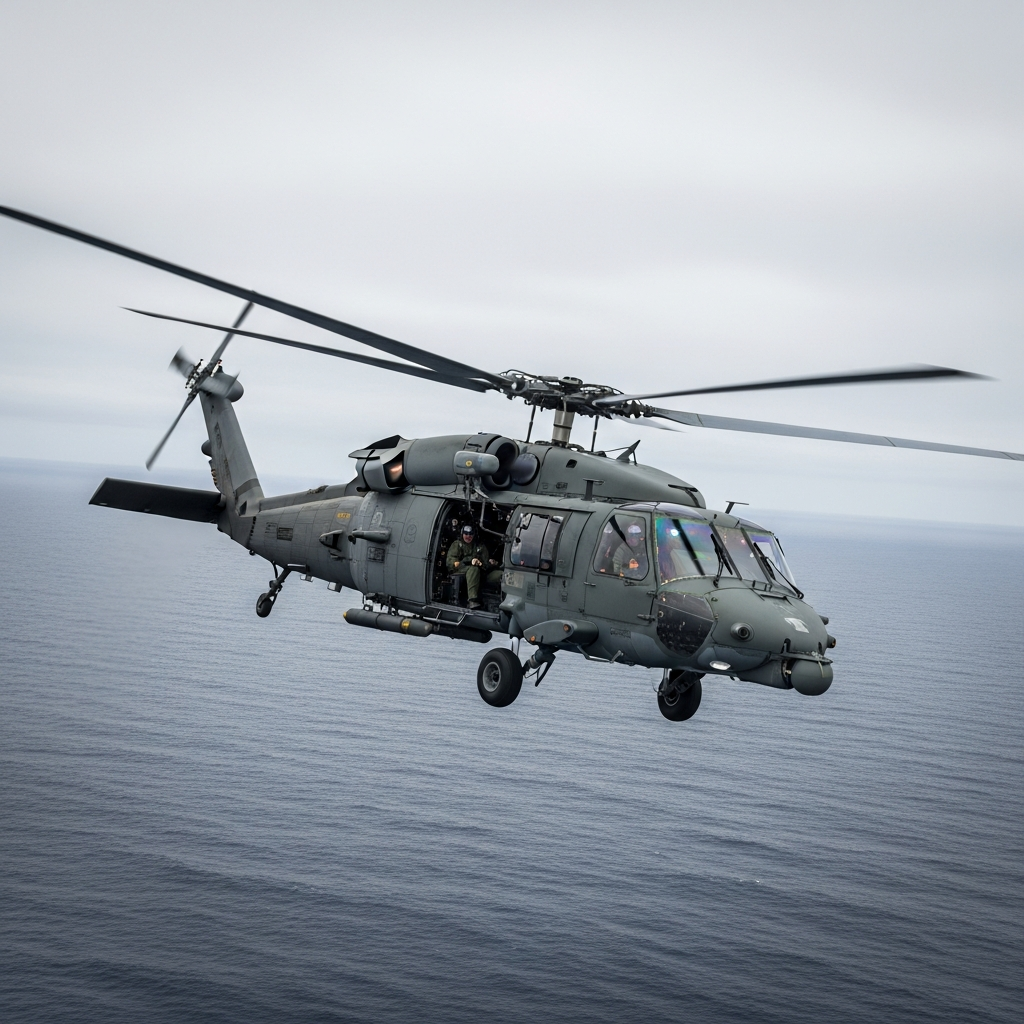
A U.S. Air Force HH-60W Jolly Green II crew pulled 11 people from the Atlantic Ocean on May 12, 2026 — completing nine water hoists in worsening weather with minutes of fuel left before the helicopter reached bingo state. All 11 survivors came from a King Air 300 charter that had gone down roughly 50 miles off Vero Beach, Florida.
The aircraft, a Beechcraft King Air 300 registered in Panama as HP-1859, lifted off from Marsh Harbour Leonard M. Thompson International Airport (MHH) at approximately 11:00 a.m. local time. Destination: Freeport Grand Bahama International Airport (FPO). A routine 20-minute island hop. It never arrived — the accident occurring at around 12:05 p.m.
Pilot Ian Nixon — a 43-year-old Bahamian aviator who has been flying since he was 18 — reported losing one engine, then the other, followed by total radio and navigation failure in rapid succession. No comms. No power. Nixon flew the stricken turboprop as far as it would take him before executing a forced water landing approximately 152 nautical miles north of Miami.
“Flying over 25 years and I’ve never seen anything like that,” Nixon told CBS News. “Lost my navigation, all radios” — and both PT6A-60A turboprops, each rated at 1,050 shaft horsepower, had gone silent.
Nixon ditched the 14,000-pound Textron Aviation-built aircraft and got all 10 passengers onto a yellow life raft. Three sustained minor injuries on impact. For roughly five hours, the survivors drifted in 3-to-5-foot seas — a thunderstorm building on the horizon — sheltering under a tarp with no way to call for help.
The Rescue — 920th Rescue Wing Diverted Mid-Training
The call came while they were already in the air. An HC-130J Combat King II from the 39th Rescue Squadron and an HH-60W from the 301st Rescue Squadron — both from the 920th Rescue Wing at Patrick Space Force Base — were running a routine training sortie when they were diverted. The King Air’s emergency locator transmitter had been pinging Coast Guard Southeast District watchstanders since the ditching. A Coast Guard Air Station Clearwater C-27 Spartan crew and the Royal Bahamas Defence Force assisted in the search.
Maj. Elizabeth Piowaty, commanding the HC-130J, found the survivors first. Her crew dropped a survival kit — two additional rafts, food, and water — before the Jolly Green moved in to begin hoisting.
“Once we flew over them and identified them, a thunderstorm was coming in, so they had their rain tarp over them for protection from exposure,” Piowaty said.
Lt. Col. Matt Johnson held the HH-60W in a ten-foot hover while Capt. Rory Whipple, a combat rescue officer, jumped into the water and swam to the survivors. Nine hoist cycles. Eleven survivors. The Jolly Green hit bingo fuel as the last person came aboard.
“You could tell just by looking at them that they were in distress — physically, mentally and emotionally,” Whipple said. “You have to imagine the emotional injuries they sustained out there, not knowing if someone was going to rescue them.”
The survivors were flown to Melbourne Orlando International Airport and transported to Holmes Regional Medical Center. All 11 were listed in stable condition; three were treated for minor injuries.
Aircraft and Investigation Notes
The King Air 300 is a relatively rare airframe. FAA certification came in January 1984, production ended in 1993, and only 225 examples were ever built. Its PT6A-60A engines carry a 3,600-hour inspection interval, and the industry-wide in-flight shutdown rate runs roughly 1 per 651,000 flight hours — which makes simultaneous dual-engine failure extraordinarily unusual by any measure.
Investigators are reportedly examining fuel contamination, fuel exhaustion, and a common-mode mechanical fault. The Bahamas Aircraft Accident Investigation Authority has indicated it does not intend to commence the investigation based on the reported location of the occurrence; Panama, as the state of registry, and the United States, as state of manufacture, have been notified.
The HH-60W involved is one of five Jolly Green IIs assigned to the 301st Rescue Squadron — the wing received its first example in February 2024, replacing legacy HH-60G Pave Hawks that had been in service since the 1980s. The Air Force currently plans to procure 102 HH-60Ws total, with two remaining in the fiscal 2026 budget.
“This rescue highlights the readiness, professionalism, and interoperability our Airmen train for every day,” said Col. Chadd Bloomstine, 920th Operations Group Commander. “We are proud to have played a role in bringing 11 people home safely.”
What to Watch
The investigation into HP-1859’s dual-engine failure will draw close attention across the Caribbean and Bahamas, where the King Air is a charter and air-ambulance workhorse on short-field island routes. If fuel contamination is confirmed, it could prompt immediate airworthiness action across the regional fleet. The AAIA and FAA investigation is ongoing.
For the aircraft behind the rescue, see our HH-60W Jolly Green II specifications and mission guide, including its fuel, aerial-refueling, defensive-system and crew details.
Stay in the loop
Get the latest aircraft insider updates delivered to your inbox.