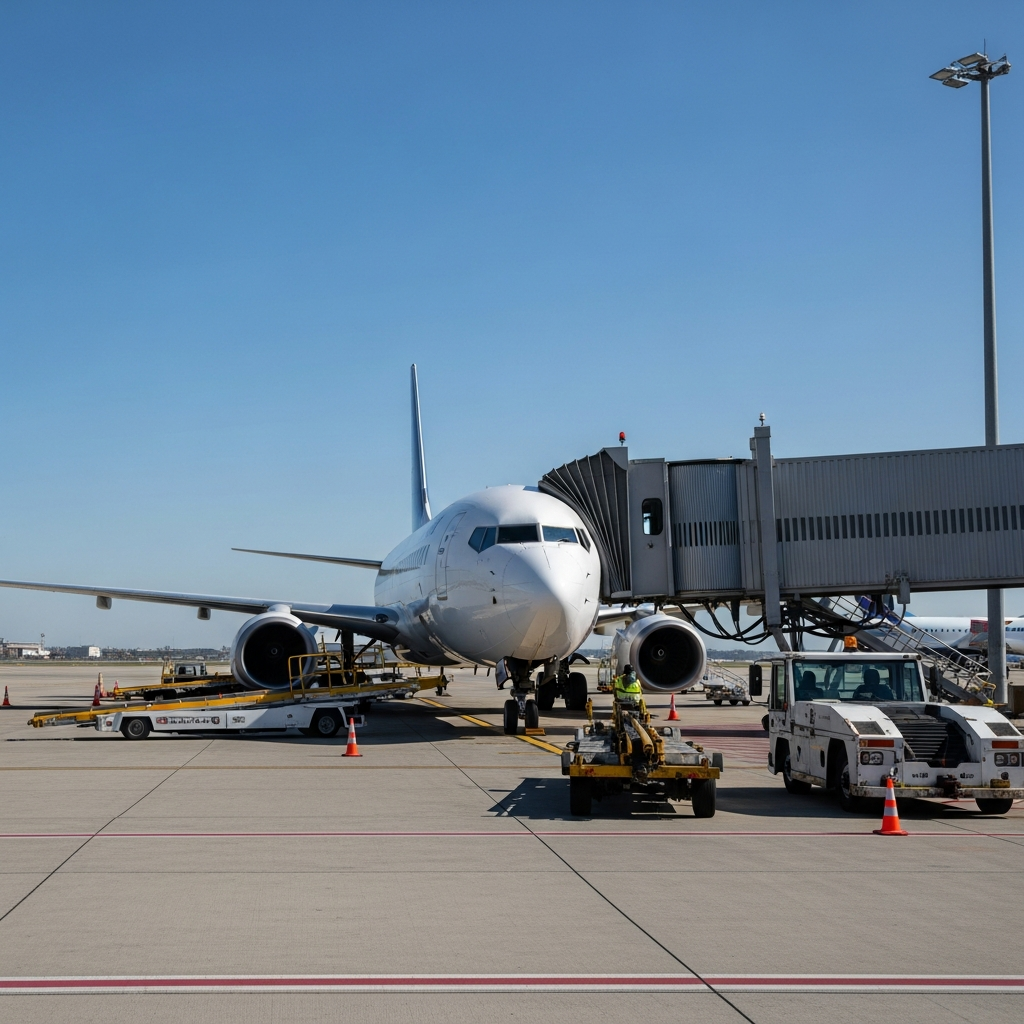
Chevron CEO Mike Wirth has a stark warning. Aviation fuel supplies are tightening rapidly across Europe and Asia. Airlines are already cutting summer schedules as jet fuel availability collapses—the result of Iran conflict disruptions and shipping blockades through the Strait of Hormuz.
On CBS’s “Face the Nation” on April 26, 2026, Wirth laid out the problem plainly: “Inventories of jet fuel in certain parts of the world were at seasonally, relatively low levels before the conflict began.” The Middle East refineries that supply 75 percent of Europe’s imported jet fuel have seen their exports severely disrupted. “It’s not flowing today. So we are seeing jet fuel tighten very quickly in Europe, in Asia, and we’re seeing airlines announce adjustments in their flight schedules.”
The price swings tell the story. Jet fuel prices surged more than 120 percent since late February 2026, hitting a record $1,800 per tonne on March 18 before settling at historically elevated levels above $1,500. U.S. prices jumped from $2.50 per gallon before the conflict to $4.88 per gallon by April 2, then declined to $4.19 per gallon by April 24—a volatile swing in just weeks. American Airlines is now budgeting $4 per gallon, up from the February average of $2.39, which means a projected $4 billion increase in operating expenses through 2026 alone.
The Supply Chain Collapse
About 25 to 30 percent of global jet fuel moves through the Strait of Hormuz. Iranian Revolutionary Guard forces have blocked shipping traffic there since February 28—the day U.S. and Israeli forces launched air strikes and assassinated Iranian Supreme Leader Ali Khamenei. Iran fired back with missile and drone attacks on U.S. military bases and regional allies, then boarded merchant vessels, laid sea mines, and warned all shipping to stay away.
The disruption works two ways at once. Major refineries in the Persian Gulf export finished jet fuel worldwide, but that product is now blocked from reaching markets. At the same time, crude oil bound for refineries in Asia and Europe—refineries that produce jet fuel—has been cut off entirely. Global jet fuel shipments fell below 2.3 million tonnes last week, the lowest level on record, according to Kpler data.
The European Union Aviation Safety Agency has flagged a dangerous workaround. Fuel shortages could force reliance on U.S.-supplied Jet A fuel instead of the standard Jet A-1 grade used across Europe and Asia. Jet A has a higher freezing point, which creates risks during long-haul operations over cold regions—a safety concern that could spiral into operational chaos if flight crews and fuel handlers misidentify fuel grades during a supply crisis.
Airlines Cut Capacity
The industry response has been swift and severe. Spirit Airlines ceased operations permanently in May, explicitly citing skyrocketing fuel costs. As of June 1, 2026, airlines have cut 9.3 million seats for the June 1–September 30 period, according to Cirium analytics. United raised baggage fees by $10 for first and second checked bags effective April 3. JetBlue and other carriers followed suit.
Wirth expects the situation to deteriorate. “I think aviation is clearly an area where it’s going to probably get worse over the next few weeks,” he said. International Energy Agency director Fatih Birol was even more alarming—Europe has “maybe six weeks or so of jet fuel left” if shipping remains halted. Ceasefire talks started April 8, but the Strait remains largely closed. Shipping traffic has not resumed at pre-war levels.
The math is brutal. Fuel represents up to 30 percent of airline operating costs. Low-cost carriers, which typically don’t hedge fuel expenses due to lean business models, are being crushed hardest. Delta has a relative advantage—they own their own refinery. But no airline is insulated from the supply shock.
Wirth stressed that global energy system flexibility has dried up. Inventories that normally act as “shock absorbers” are depleted. “The risks kind of skew to the upside right now,” he said. Even if the Strait reopens immediately, IATA Director General Willie Walsh noted that supply normalization would take months, not weeks.


Stay in the loop
Get the latest aircraft insider updates delivered to your inbox.