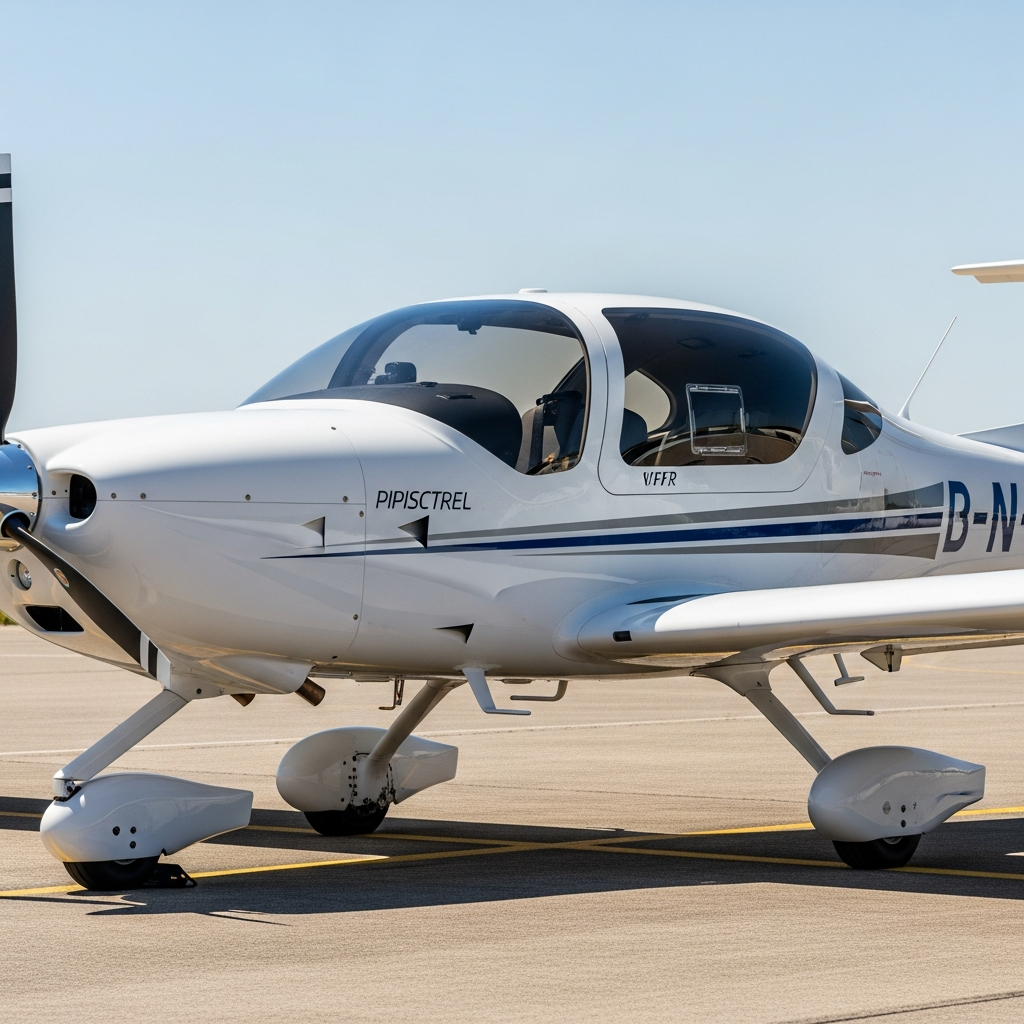
Textron unveiled the Pipistrel Voyager at EAA AirVenture Oshkosh on July 20, 2026. The two-seat trainer marks a significant milestone: it’s the first aircraft from the Textron Aviation family designed specifically around the FAA’s new MOSAIC certification rules. The timing couldn’t have been tighter—the MOSAIC light-sport aircraft certification requirements take effect July 24, 2026, just four days later.
That wasn’t coincidence. Textron deliberately engineered the Voyager around performance-based certification standards that allow larger, more capable aircraft to qualify under the new Part 22 pathway. The result fundamentally changes how light aircraft reach the market.
Power comes from a familiar 100-horsepower Rotax 912 ULS paired with the newly announced Garmin AXIS integrated avionics suite. The base price: €240,000 (roughly $275,000). That undercuts the Cessna 172 Skyhawk—which sells for $580,000—by a substantial margin.
Purpose-Built for Training Disruption
The specs read like purpose-built trainer benchmarks. At 21 feet 1 inch long with a 35-foot 1-inch wingspan, the Voyager cruises at 133 knots and carries a 740-nautical-mile range. Its 552-pound useful load and 18,000-foot service ceiling support advanced training operations. But here’s the real advantage: the Voyager is approved for IFR operations, intentional spins for upset recovery instruction, and carries an integrated ballistic parachute.
One airframe. Multiple training phases. That’s the pitch—basic operations, instrument training, and advanced recovery techniques all under one aircraft type. Flight schools get lower acquisition costs and simplified fleet management.
“The Voyager is built to be a training workhorse,” said Chris Crow, Vice President of Piston Sales at Textron Aviation. “It gives flight schools the ability to expand capability while maintaining the efficiency, accessibility and reliability Pipistrel is known for.”
The avionics represent equally significant innovation. Garmin’s AXIS system integrates GPS, NAV/COMM, audio panel, three-axis autopilot, electronic stability protection, and haptic stall warning into a single touchscreen display with physical control buttons. The Voyager is the first Pipistrel aircraft equipped with it.
Strategic Speed-to-Market Play
Textron leveraged Pipistrel’s existing manufacturing capabilities to accelerate the introduction. “We didn’t want to wait to introduce a MOSAIC-capable aircraft,” Crow explained. “We wanted to bring something to market much more quickly, and Pipistrel’s capabilities allowed us to do that.”
Speed matters. The Cessna Skyhawk order book currently extends into 2028. Rather than chasing those customers directly, Textron positioned the Voyager as a complementary platform—targeting the growing pilot shortage and fleet modernization demand in military and commercial training sectors. The global pilot training and management market is expected to climb from $11.54 billion in 2025 to $12.31 billion in 2026 and is projected to reach $15.86 billion by 2030, growing at 6.7 percent annually.
Launch Customer Signals Confidence
Epic Flight Academy became the launch customer on July 20. The 12-location Florida-based flight school—which operates primarily Skyhawks—committed to purchasing up to 50 Voyagers: ten for 2027 delivery with options for 20 aircraft in 2028 and another 20 in 2029.
“The Voyager augments Epic’s current training fleet and expands training capability and flexibility while reducing training costs,” the company stated.
Production begins in early 2027. Watch for additional flight school announcements—and whether Textron’s capacity matches the market appetite for a lower-cost, high-capability trainer built on proven European design fundamentals.
Stay in the loop
Get the latest aircraft insider updates delivered to your inbox.