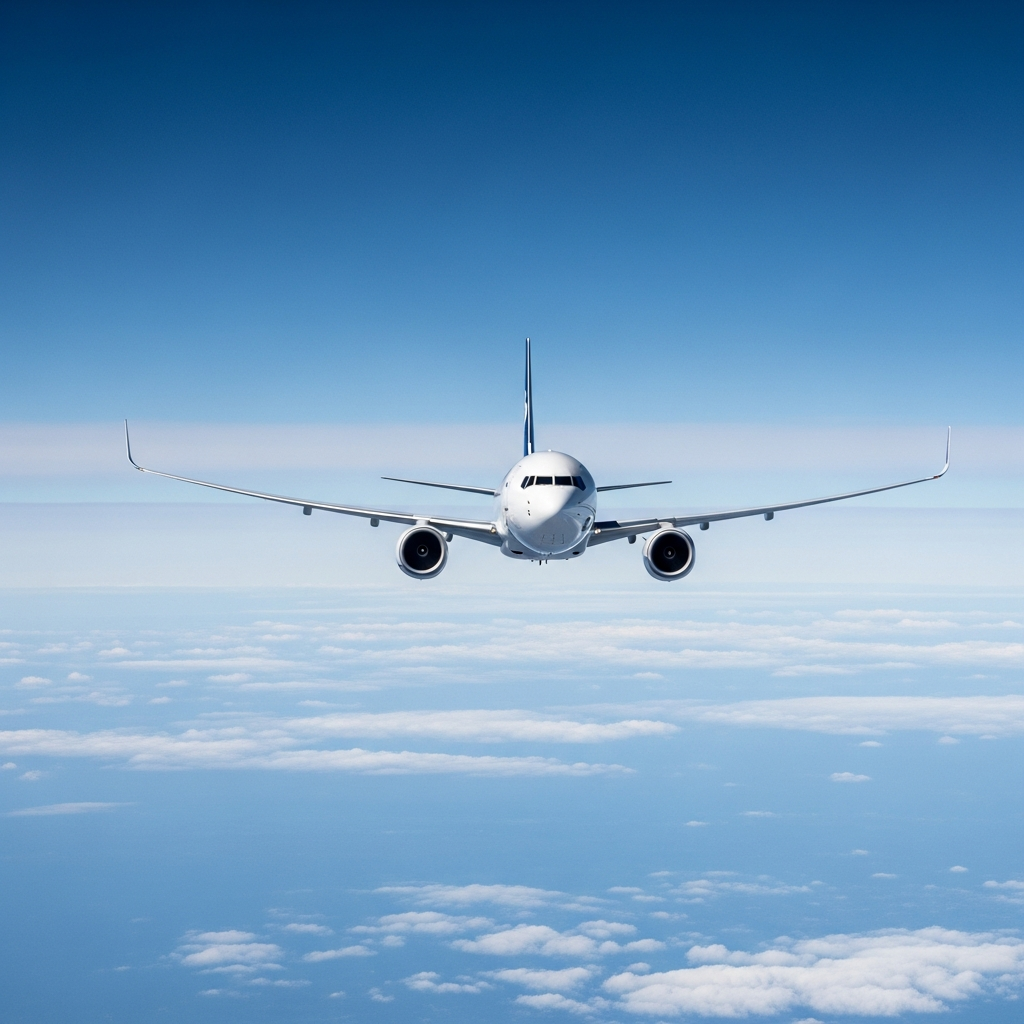
Boeing outdelivered Airbus in Q1 2026 — the first time that’s happened since the 737 MAX crisis rewrote the competitive order. Boeing handed over 143 commercial aircraft in the quarter against Airbus’s 114, according to figures released April 14.
It’s Boeing’s strongest first-quarter narrowbody performance since 2018, the year the company set an all-time delivery record of 806 aircraft before two fatal MAX crashes and a global grounding brought the program — and much of Boeing’s credibility — to its knees. For Airbus, it was the worst Q1 result in more than two decades, dragged down by a Pratt & Whitney engine shortage that has throttled A320neo family output for the better part of two years.
The Numbers Behind the Reversal
Boeing’s Q1 total breaks down to 114 narrowbody 737s, 15 787 Dreamliners, eight 777-family widebodies, and six 767s — the latter predominantly in freighter configuration. The monthly cadence told its own story: 46 deliveries in January, a February total that Reuters described as Boeing’s strongest February since 2018, and 46 more in March despite a slight pullback in MAX output to 33 units that month.
Airbus closed March strongly. The company handed over 60 aircraft in the final month of the quarter alone — including 41 A320neo family jets, eight A220s, eight A350s, and three A330neos. It wasn’t enough. Boeing’s lead held at 29 aircraft for the full quarter.
Production Cap — Lifted
The delivery surge traces directly to regulatory relief Boeing spent nearly two years fighting for. After the January 5, 2024 door plug blowout on Alaska Airlines Flight 1282 — a MAX 9 operating as AS1282 out of Portland — the FAA capped 737 production at 38 aircraft per month and refused to lift it until Boeing demonstrated sustainable quality control under a formal Safety Management System framework.
The cap rose to 42 per month in October 2025. Then in March 2026, the FAA lifted the numerical constraint entirely, replacing it with SMS compliance requirements. Boeing now produces MAXs at 42 per month across its Renton Final Assembly Line and the newly activated fourth production line in Everett, Washington — the first time the 737 MAX has been built outside Renton.
Ortberg’s Next Move — 47 Per Month
On April 22, speaking to CNBC’s Squawk on the Street after Boeing posted better-than-expected Q1 earnings — a loss of just 20 cents per adjusted share against analyst expectations of 83 cents, on revenue of $22.22 billion — CEO Kelly Ortberg confirmed where production goes next.
“Boeing CEO Kelly Ortberg said the company expects to ramp up production of its best-selling 737 Max aircraft to 47 a month from 42 this summer, key to stemming the manufacturer’s losses.”
The end-of-year target is 53 per month. Boeing’s commercial backlog stood at approximately 6,719 aircraft at March 31 — roughly 10.1 years of production coverage at current rates — with 4,887 of those orders sitting in the 737 MAX column alone. Total backlog reached a record $694.7 billion.
MAX 7 and MAX 10 — Certifications on the Horizon
Two MAX variants remain conspicuously absent from those delivery totals: the MAX 7 and MAX 10, both still awaiting FAA type certification. The FAA cleared the MAX 10 for Phase 2 of its Type Inspection Authorization flight testing in late December 2025, with Boeing commencing those flight tests in early January 2026 — the final certification flight test phase. Southwest Airlines CEO Bob Jordan expects the smaller MAX 7 certified by August 2026, with Southwest as launch operator. Ryanair CEO Michael O’Leary told reporters in Brussels on March 20 that Boeing was “pretty confident” of MAX 7 certification in Q2 2026 and MAX 10 certification in Q3 2026.
On April 21, FAA Administrator Bryan Bedford removed any remaining ambiguity.
“We haven’t seen anything today that would indicate that Boeing would not be able to meet certification before the end of the year.”
Boeing’s official guidance calls for both certifications in 2026, with first deliveries in 2027. Ryanair has 15 MAX 10s penciled in for spring 2027. Southwest is the MAX 7 launch customer.
What to Watch
Sustaining this delivery lead through Q2 and Q3 means executing the ramp to 47 per month at the new Everett line without triggering the kind of quality escapes that cost Boeing nearly two years of production growth. The 777X program is targeting 777-9 first delivery in 2027, with Lufthansa as launch operator. The 787 sits at eight per month, with a target of 10 before year’s end.
Airbus remains the long-term volume leader. For one quarter, though, Boeing reclaimed the top line — and the question now is whether it can hold it.
Stay in the loop
Get the latest aircraft insider updates delivered to your inbox.