How Do Pilots See at Night
As someone who remembers their first night flight vividly — the way the transition from daylight to darkness fundamentally changes how you perceive the world from a cockpit — I learned everything there is to know about how pilots operate safely after dark. Today, I will share it all with you.
Your eyes adapt, instruments become primary, and the tools that seemed supplementary during day VFR become essential. Night flying is both more demanding and more rewarding than it initially appears.
Night Vision Adaptation
Human eyes need roughly 30 minutes to fully adapt to darkness. Probably should have led with this, honestly, because that adaptation process is why experienced pilots dim cockpit lighting and avoid bright lights before night flights. Red cockpit lighting preserves night vision while still allowing instrument reading. Peripheral vision becomes more important at night — the eye’s rods, which handle low-light detection, concentrate outside the center of the visual field, which means you often see dim objects better by not looking directly at them.
Cockpit Instrumentation
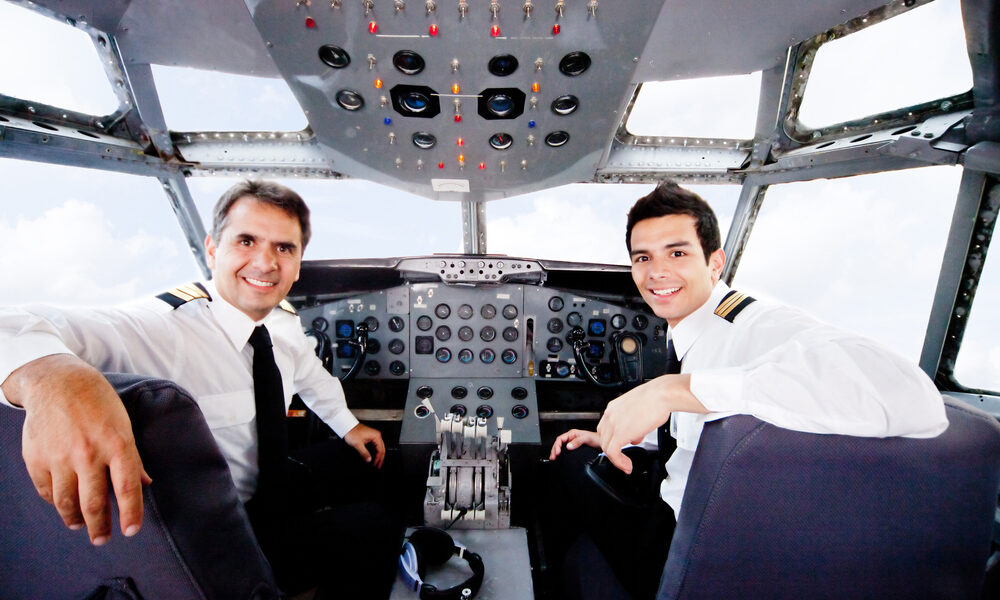
Instruments provide the information your eyes simply cannot gather directly at night. Attitude indicators, altimeters, airspeed indicators, and navigation displays are well-lit and continuously updating. That’s what makes instrument skills endearing to safety-conscious pilots: they work regardless of external visibility, whether it’s clouds, darkness, or both.
Flight Management Systems automate navigation, fuel management, and flight planning, reducing workload in the areas where distraction is most dangerous.
External Aircraft Lighting
Aircraft carry multiple light systems for different purposes:
- Navigation lights: Red on the left wing, green on the right, white on the tail. These tell other pilots your orientation and which direction you’re traveling.
- Landing lights: Powerful forward-facing beams that illuminate runways during takeoff and landing
- Taxi lights: Configured for ground maneuvering at lower speeds
- Strobe lights: High-visibility flashing lights visible for many miles in clear conditions
- Beacon: Rotating red light indicating engines are running or about to start
Navigation Aids
GPS provides precise positioning regardless of darkness or weather. VOR beacons and NDB stations offer backup navigation. ILS systems guide aircraft to runways with precision even in zero visibility conditions. Modern navigation has made night flying dramatically safer than earlier eras when pilots relied primarily on ground-based visual references that simply weren’t visible at night.
Weather Radar
Weather radar detects precipitation and turbulence ahead. At night, you cannot see convective buildups visually until you’re dangerously close to them. Radar provides the early warning that daylight pilots get from simply looking outside at clouds, and it works better in some respects — radar shows what’s actually there rather than what light conditions allow you to perceive.
Enhanced Vision Systems
EVS uses infrared sensors to detect objects and terrain, displaying thermal imagery on cockpit screens. These systems highlight obstacles, terrain features, and other aircraft that would otherwise be invisible in darkness. EVS is particularly valuable during approach and landing when the ground is close and the margin for error is smallest.
Head-Up Displays
HUDs project critical flight information onto transparent screens in the pilot’s forward field of view. Altitude, airspeed, flight path, and navigation data appear without requiring the pilot to look down at instruments. This maintains situational awareness during critical phases when looking away for even a few seconds has consequences.
Synthetic Vision Systems
SVS creates three-dimensional terrain representations using GPS data and terrain databases. The display shows terrain and obstacle positions even when you can’t see anything outside. Mountains, towers, and terrain features appear on the display, dramatically improving spatial awareness in areas where controlled flight into terrain remains a risk.
Communication
Constant communication with air traffic control provides traffic advisories, weather updates, and clearances. ATC has radar coverage that shows what pilots cannot see. That coordination is essential for safe night operations in busy airspace, and even in less busy airspace it provides an important safety backstop.
Training
Night flying requires specific training and practice. Instrument skills become critical in ways that day VFR doesn’t demand. Pilots practice night approaches, landings, and emergency procedures before facing them in actual dark conditions. This preparation ensures competence precisely when visual cues are unavailable and managing uncertainty is most important.
Runway and Approach Lighting
Airports provide extensive lighting systems specifically for night operations. Runway edge lights, centerline lights, approach lighting systems, and VASI/PAPI glidepath indicators guide aircraft to safe landings. These systems make visual approaches fully workable in complete darkness for pilots who know how to use them.
Redundancy
Aircraft systems are designed with multiple backups specifically because there are scenarios where you cannot see what’s happening. If one navigation source fails, others remain operational. If primary flight displays fail, backup instruments continue working. This redundancy is what makes night flying safe in practice, not just in theory.
Night flying isn’t inherently more dangerous than day flying when pilots are properly trained and equipped. The technology and procedures that enable safe night operations represent decades of hard-won aviation evolution, turning what was genuinely hazardous into routine operations performed safely every night around the world.




Stay in the loop
Get the latest wildlife research and conservation news delivered to your inbox.